Kenya vs. Avic International (November 2024): Transfer Pricing Dispute Over Method SelectionKenya vs. Avic International (November 2024): Transfer Pricing Dispute Over Method Selection
In this landmark Kenyan transfer pricing case, the Tax Appeals Tribunal upheld the tax authority's rejection of the Resale Price Method in favor of TNMM, resulting in a significant tax adjustment for Avic's vehicle assembly operations.
Borys UlanenkoCEO of ArmsLength AI
15min read
Contents↓
Contents
TL;DR key takeaways
The Kenyan tax authority (KRA) successfully argued that Avic's assembly operations added substantial value, making TNMM more appropriate than the Resale Price Method.
The Tribunal upheld a significant Kshs. 424.9 million income adjustment based on the TNMM analysis, increasing Avic's tax liability.
The case establishes key precedent on transfer pricing method selection for entities with manufacturing or assembly activities in Kenya.
The ruling partially favored the taxpayer on procedural issues, enforcing the 5-year statute of limitations and reducing certain secondary adjustments.
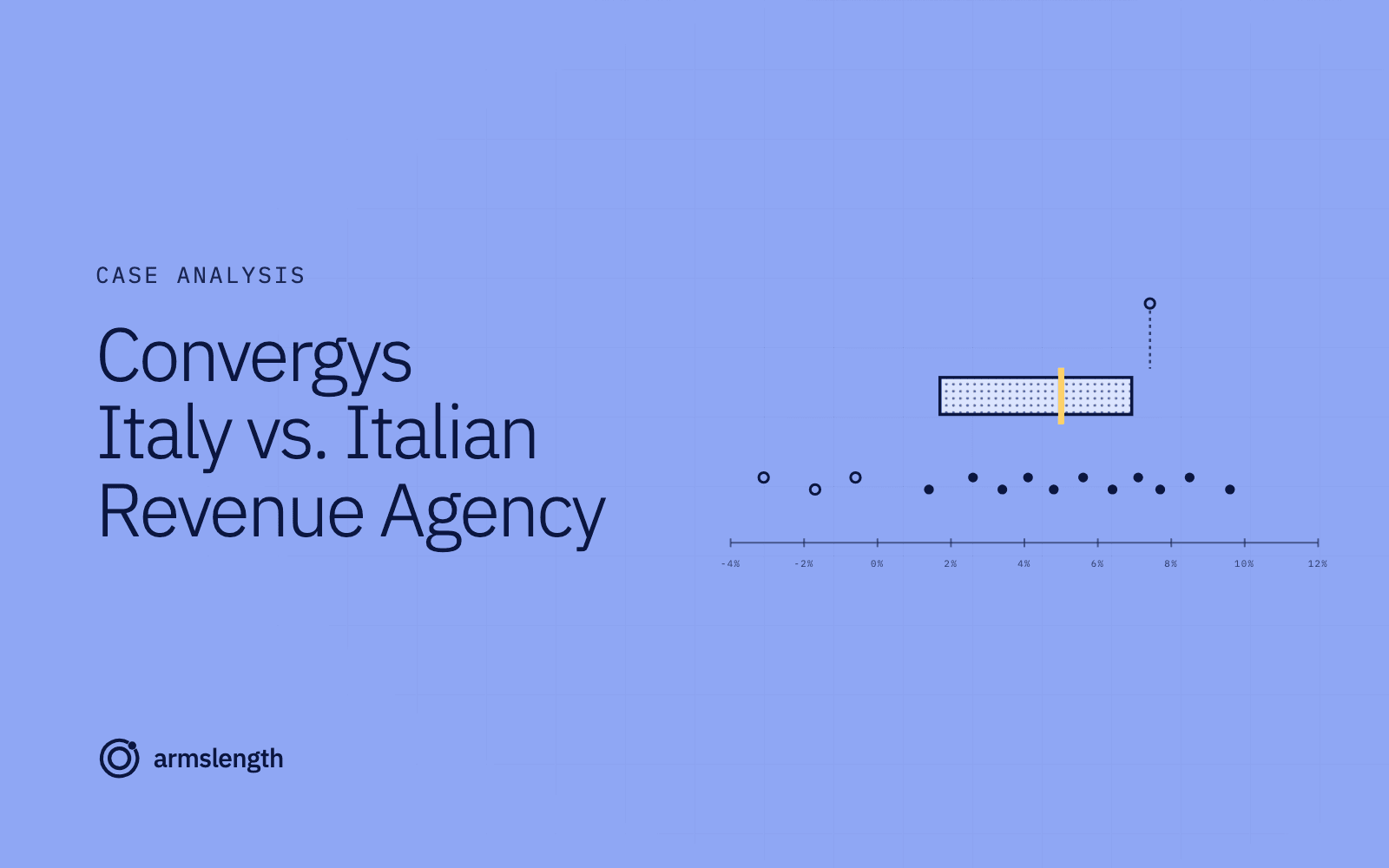
In this Italian transfer pricing case, the Supreme Court addressed when loss-making comparables may be retained and why exclusions require case-specific support under OECD-aligned analysis.
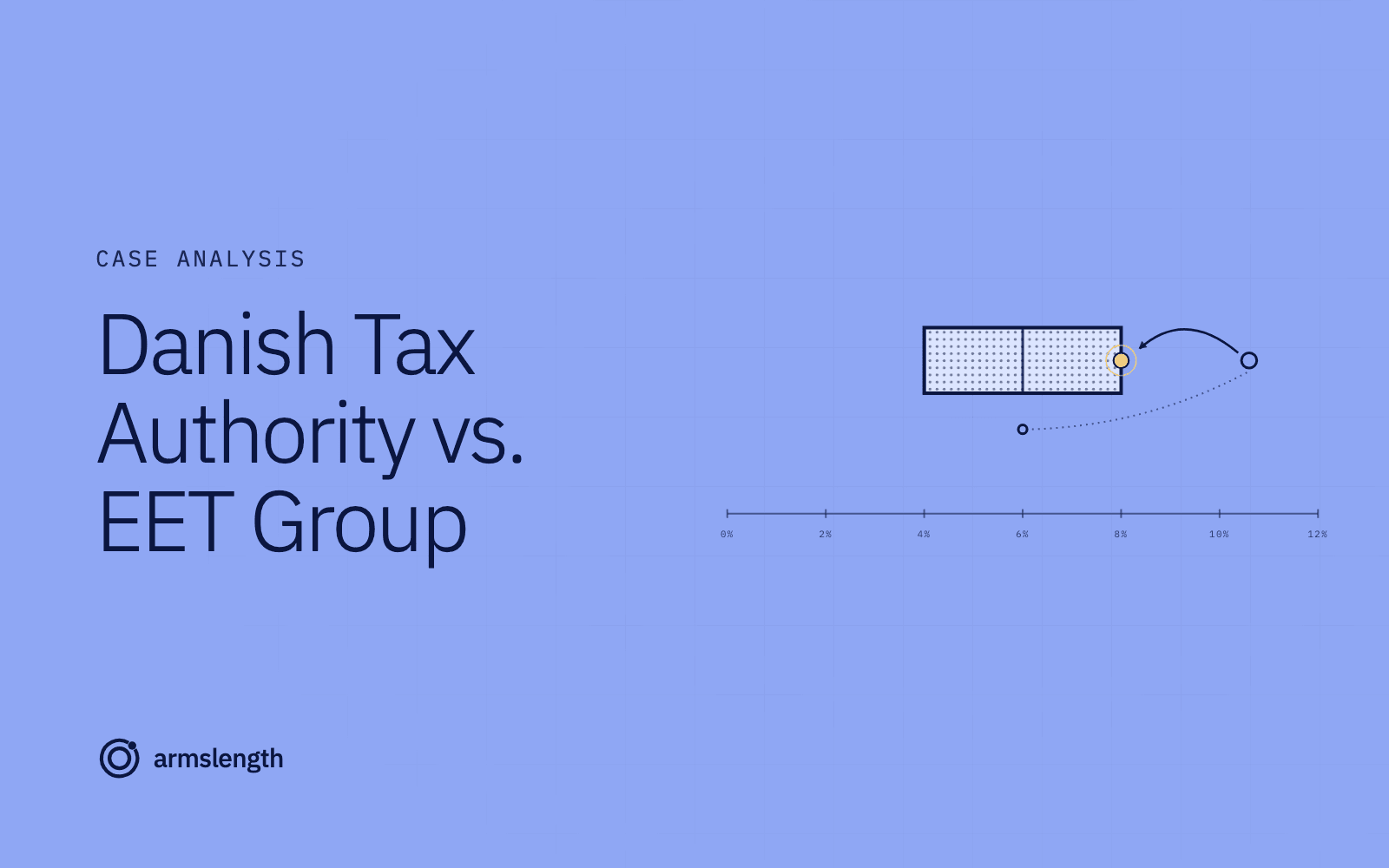
In this landmark Danish transfer pricing dispute, the Eastern High Court ruled in favor of EET Group, rejecting a DKK 129 million adjustment and setting important precedents for method selection and range application.
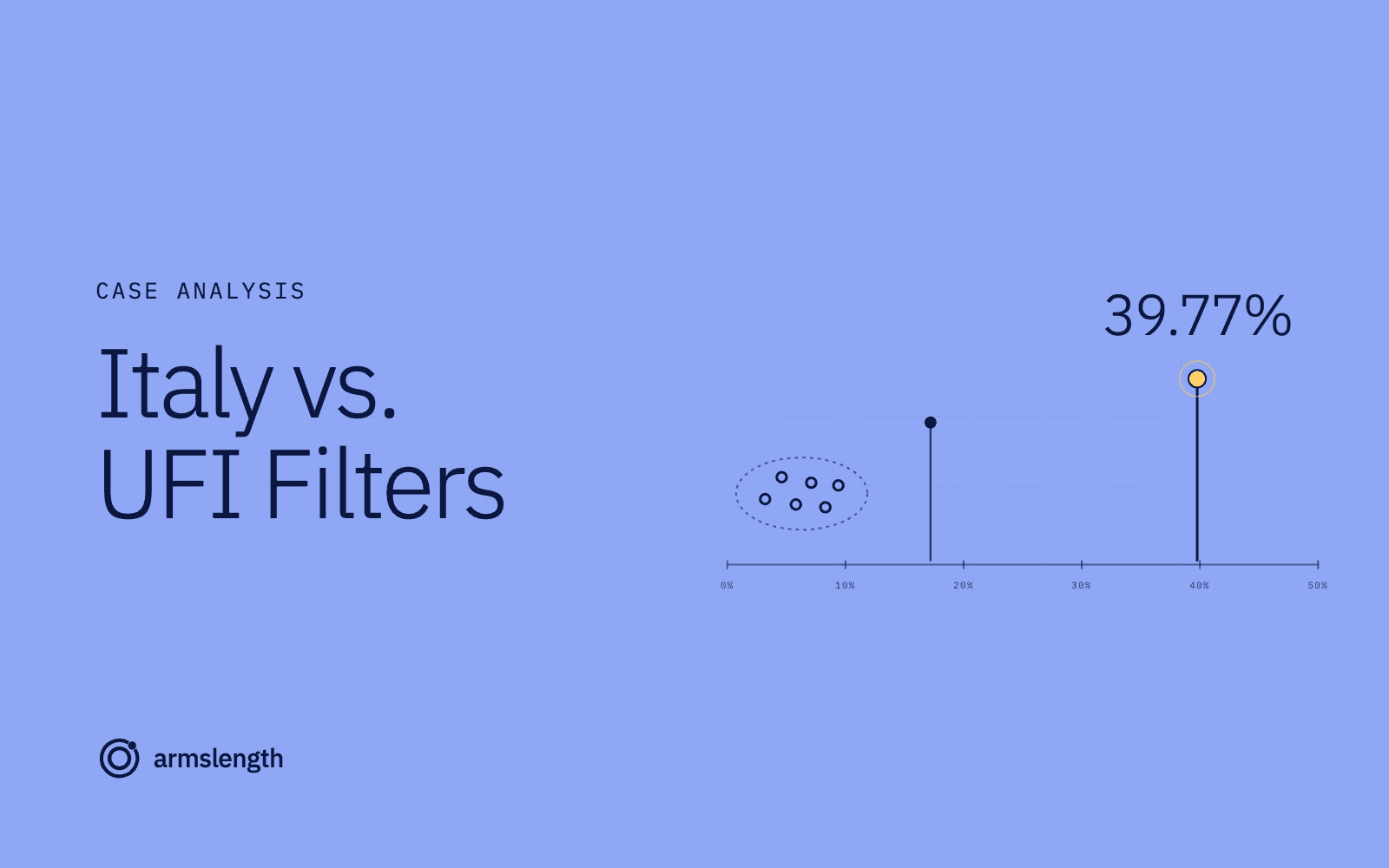
In this high-profile transfer pricing case, UFI Filters successfully defended its 39.77% intra-group markup against the Italian tax authority, highlighting the critical importance of proper comparability analysis.
More resources for your next workflow stepMore resources for your next workflow step
Browse the full resource library or contact us if you want recommendations for your specific use case.
In a landmark Kenyan transfer pricing case, the Tax Appeals Tribunal ruled on the appropriate pricing methodology for an automotive assembler's intercompany purchases. The November 2024 decision in Avic International Beijing (EA) Ltd v. Commissioner of Domestic Taxes has significant implications for multinationals with manufacturing or assembly operations in Kenya, establishing important precedent on transfer pricing method selection, functional analysis, and profit allocation.
1. Overview & Context
Case Background
Avic International Beijing (EA) Ltd ("Avic EA") is a Kenyan company established in 2015 that imports motor vehicle parts in the form of Completely Knocked Down (CKD) kits from its related company in China, assembles them into finished vehicles, and sells the completed products in the Kenyan market. The related Chinese entity, Avic International Beijing Co. Ltd ("Avic China"), functions as a procurement intermediary, purchasing CKD parts from independent manufacturers and reselling them to Avic EA.
Avic International vs KRA Timeline: Key Events
2015
2021
2023
2023
2023
2024
Hover over or click any point to see details about that stage of the Avic International Case
In 2021, the Kenya Revenue Authority (KRA) conducted a tax audit of Avic EA, covering tax years 2016–2021 (later expanded to 2023). On June 29, 2023, KRA issued additional tax assessments totaling approximately Kshs. 530.5 million, later slightly reduced to Kshs. 514.15 million following the company's objection.
A substantial portion of the assessment stemmed from a transfer pricing adjustment on the intercompany purchase of CKD kits. The dispute centered on Avic's use of the Resale Price Method (RPM) versus KRA's preference for the Transactional Net Margin Method (TNMM), leading to a significant upward adjustment of Avic EA's taxable income.
After KRA maintained most of its assessment in its objection decision, Avic EA appealed to the Tax Appeals Tribunal, which delivered its ruling in November 2024.
Financial and Policy Implications
The case carried substantial financial stakes for Avic EA, with the transfer pricing adjustment alone adding Kshs. 424.9 million to its taxable income over five years, resulting in approximately Kshs. 173 million in additional corporate tax. The tax authority also imposed withholding tax on the adjustment as a deemed dividend, further increasing the tax bill.
Beyond the immediate financial impact, the case has important policy implications for transfer pricing enforcement in Kenya. It provides clarity on how the tax authority and courts interpret the arm's length principle in relation to manufacturing and assembly operations, and sets precedent on the appropriate transfer pricing methodology for such activities.
2. Core Transfer Pricing Issues
Transfer Pricing Method Selection
At the heart of this dispute was the appropriate transfer pricing method for evaluating Avic EA's purchase of CKD kits from its Chinese affiliate.
Avic International Transfer Pricing Dispute Flow
Avic International Beijing Co. Ltd (China)
Related Procurement Intermediary
Purchases CKD parts from third-party manufacturers
Resells CKD parts to Avic EA in Kenya
No significant value addition to the parts
CKD Parts Supply
Transfer Price Payment
Avic International Beijing (EA) Ltd (Kenya)
Local Assembly & Distribution Entity
Assembles CKD parts into complete vehicles
Sells finished vehicles in Kenya
Functions disputed: distributor vs. manufacturer
Key Dispute Focus
KRA rejected Avic EA's use of the Resale Price Method (RPM) and applied Transactional Net Margin Method (TNMM), arguing that Avic EA performed substantial value-adding assembly functions beyond mere distribution. This led to a ≈Kshs. 425 million income adjustment.
Avic EA had priced its CKD parts transactions using the Resale Price Method (RPM), treating itself primarily as a distributor of vehicles with assembly viewed as a minor value addition. The company's benchmarking analysis identified comparable distributors and established an arm's length gross profit margin interquartile range of approximately 7.3% to 13.2% (median ~9.1%). Avic EA maintained that its own gross margins on vehicle sales fell within this range, indicating that its transfer prices were at arm's length.
Note
The Resale Price Method starts with the price at which a product purchased from a related party is resold to an independent enterprise. This price is then reduced by an appropriate gross margin representing the amount the reseller would seek to cover selling and operating expenses while earning an appropriate profit.
The KRA, however, rejected the RPM in this case. It cited the extensive value-added activities Avic EA performed—assembly, fabrication of trailers, design modifications, marketing, and after-sales support for heavy commercial vehicles—as reasons why RPM was inappropriate. Instead, KRA applied the Transactional Net Margin Method (TNMM), with Avic EA as the tested party.
Using TNMM, KRA benchmarked the company's operating profit margin against comparable manufacturers and concluded that Avic EA's profits were too low. KRA's analysis yielded an arm's length operating margin with a median of approximately 10.95%, leading to an upward adjustment of Avic EA's taxable income by about Kshs. 424.9 million spread across 2017–2021.
Functional Analysis and Arm's Length Principle
The case highlighted the critical importance of accurate functional analysis in transfer pricing. Avic EA positioned itself as primarily a distributor with minor assembly operations, justifying its use of RPM. However, the KRA's functional analysis characterized Avic EA as a "fully-fledged manufacturer" owning valuable intangibles like design capabilities and customer relationships.
Warning
The Tribunal noted that both parties actually agreed in their functional analyses that Avic EA performs significant functions, yet Avic EA had selected itself as the tested party for RPM without adequately accounting for these extra functions.
Interestingly, in its January 2023 response to KRA's audit, Avic acknowledged it had made an error by using Avic EA (rather than Avic China) as the tested party in its transfer pricing study. Avic stated that Avic China was the least complex entity and "rightful tested party," conceding that Avic EA was more complex and owned important intangibles. However, Avic never submitted a corrected RPM analysis using Avic China as the tested party to support its case.
Other Disputed Issues
Beyond the core transfer pricing methodology dispute, several additional issues arose:
Undeclared Sales: KRA identified a Kshs. 239.47 million discrepancy in 2019 between sales reported in VAT returns versus financial statements, which it treated as undeclared income. Avic attributed this to timing differences and reporting anomalies.
Statute of Limitations: Avic challenged KRA's assessment periods, arguing they went beyond the 5-year statutory limit allowed under Kenyan tax law.
Expatriate Taxation: KRA had determined that Avic EA underpaid both PAYE (for expatriate employees) and withholding tax (on deemed management fees for seconded staff), essentially taxing the same remuneration twice.
Secondary Adjustment: KRA treated the transfer pricing adjustment as a deemed dividend to the foreign parent company under a 2018 Kenyan tax provision, subjecting it to withholding tax.
3. Stakeholder Positions
The dispute involved three key stakeholders with distinct positions on the transfer pricing issues:
Key Stakeholder Positions in the Avic International TP Dispute
Avic International (EA) Ltd - Taxpayer (Appellant)
Argued that Resale Price Method (RPM) was appropriate as it was primarily a distributor of vehicles with minor assembly work. Benchmarked gross profit margin against auto distributors with an interquartile range of 7.3%-13.2%, with actual margins falling within this range.
Kenya Revenue Authority - Tax Authority (Respondent)
Applied Transactional Net Margin Method (TNMM) due to Avic EA's significant manufacturing and value-adding functions. Benchmarked operating profit margin against comparable manufacturers with median of ~10.95%, finding Avic EA's profits too low.
Tax Appeals Tribunal - Adjudicator
Upheld TNMM as the appropriate method, finding that Avic EA failed to establish comparability of distributors and that its assembly functions added significant value to the products, altering their nature.
4. Analysis & Court Decision
Tribunal's Reasoning on Method Selection
The Tax Appeals Tribunal largely sided with the Commissioner on the transfer pricing issue, upholding the use of TNMM and the resulting income adjustment. After reviewing the functional profiles of both parties and the comparability analysis, the Tribunal concluded that Avic EA's choice of RPM was inappropriate given its substantial assembly and value-adding activities.
The Tribunal emphasized that Avic's choice of comparables omitted companies engaged in assembly/fabrication—an omission that "significantly impacted" the reliability of its benchmarking. It found that applying RPM in this situation "would lead to unreliable results" since Avic EA's assembly and value-adding activities clearly altered the products and added significant value.
Key point
The Tribunal cited OECD Guidelines (paras. 2.34–2.35) which warn that RPM loses reliability when the reseller substantially changes the product or adds significant value before resale—precisely the situation with Avic EA.
Additionally, the Tribunal noted that Avic's own evidence undermined its position. Avic had admitted in its correspondence with KRA that it had initially selected the wrong tested party (using Avic EA instead of Avic China), yet never submitted a corrected analysis to support its case.
Since Avic EA did not meet its burden of proof to show that KRA's TP adjustment was wrong or excessive, the Tribunal upheld the full Kshs. 424,914,851 adjustment and the associated corporate tax.
Decision on Secondary Issues
While the main transfer pricing adjustment was upheld, the Tribunal ruled in Avic's favor on several secondary issues:
5-Year Limitation: The Tribunal agreed with Avic that the tax authority cannot go beyond the 5-year statutory limit without proof of fraud or gross neglect. It struck out portions of PAYE and WHT assessments for periods before July 2018.
"Undeclared" Sales: The Tribunal accepted most of Avic's explanations for the sales variance, reducing the alleged undeclared income from Kshs. 239.47 million to approximately Kshs. 57 million.
Expatriate Staff Taxation: The Tribunal prevented double taxation by eliminating the WHT on imputed management fees and ensuring PAYE was only applied to actual salaries within the proper timeframe.
Deemed Dividend WHT: The Tribunal delivered a split outcome, affirming that transfer pricing adjustments can be deemed dividends under Kenyan law, but restricting this treatment to periods after the law's effective date (ruling that WHT on deemed dividends before November 2019 must be set aside).
In its final order, the Tribunal directed KRA to recompute the tax due, removing the disallowed portions and recalculating PAYE/WHT as instructed.
5. Key Takeaways
Importance of Functional Analysis and Method Selection
The Avic case underscores that selecting the appropriate transfer pricing method must be driven by accurate functional analysis. Companies that engage in substantial manufacturing, assembly, or other value-adding activities cannot simply apply a distributor-style method (RPM) without robust justification.
Tip
When a local entity adds significant value through production, customization, or complex services, tax authorities may insist on profit-based methods like TNMM to properly gauge arm's length results.
Multinationals should carefully evaluate their transactions—if the local subsidiary is more than a low-risk distributor, an alternative method might be more defensible. Choosing the wrong method can lead to large adjustments, as seen in this case.
Documentation and Burden of Proof
The case highlights that in Kenya, the burden lies with taxpayers to disprove the revenue authority's assessment. If a company disagrees with a transfer pricing adjustment, it must proactively provide evidence and alternative analysis.
Avic EA's failure to produce a corrected benchmarking (despite admitting an error in its original study) weakened its position significantly. Companies should maintain detailed, up-to-date transfer pricing documentation, including robust functional analyses and benchmarking studies that accurately reflect their operations.
Secondary Adjustment Consequences
The Avic case signals that KRA is willing to enforce transfer pricing adjustments and impose secondary adjustments (like deemed dividend withholding tax) when applicable. Kenya's introduction of deemed dividend taxation in 2018 is now judicially recognized—multinational enterprises need to be aware that if their Kenyan subsidiary's income is increased due to a transfer pricing adjustment, KRA may treat that increase as a dividend to the foreign parent and levy withholding tax.
This effectively can raise the cost of a transfer pricing adjustment by an additional 10%. Companies should strive to avoid large primary adjustments by setting correct prices initially.
Status of OECD Guidelines in Kenya
The Tribunal's frequent citation of the OECD Transfer Pricing Guidelines reinforces their persuasive authority in Kenya. The judgment repeatedly referenced OECD principles on method selection, comparability, and functional analysis.
This suggests that multinational enterprises operating in Kenya should ensure their transfer pricing policies and documentation align with OECD standards, as these will likely be used as a yardstick in disputes.
6. Broader Implications for Multinationals in Kenya
The Avic International decision carries important implications for multinational enterprises operating in Kenya and similar jurisdictions:
Assembly Operations Are Not Mere Distribution: Companies with assembly operations in Kenya should revisit their transfer pricing methods. The case clarifies that assembly, even of CKD kits, may constitute substantial value addition that makes RPM inappropriate.
Tested Party Selection Matters: The case demonstrates the importance of selecting the correct tested party. Companies should choose the least complex entity with reliable financial data and similar functions to available comparables.
Statute of Limitations Enforcement: The ruling gives comfort that Kenya's 5-year limitation on tax audits is enforceable. KRA cannot circumvent this limit without clear evidence of fraud.
Limitations on Secondary Adjustments: The decision establishes that while deemed dividend treatment of transfer pricing adjustments is valid in Kenya, it cannot be applied retroactively before the enabling legislation.
Double Taxation Prevention: The Tribunal's rejection of simultaneous PAYE and WHT on the same remuneration provides precedent against double taxation of expatriate arrangements.
The Avic International ruling demonstrates the sophistication of KRA's transfer pricing enforcement and the Tribunal's willingness to uphold adjustments when appropriate method selection and functional analysis principles are not followed.
Frequently Asked Questions
What was the main transfer pricing issue in the Avic International case?
The core dispute was whether the Resale Price Method (RPM) or Transactional Net Margin Method (TNMM) was more appropriate for pricing CKD kit purchases from China. Avic EA argued it was primarily a distributor with minor assembly work (supporting RPM), while KRA contended it was effectively a manufacturer with substantial value-adding functions (requiring TNMM).
Why did the Tax Appeals Tribunal reject the Resale Price Method?
The Tribunal rejected RPM because Avic EA's assembly, fabrication, and design activities significantly altered the products and added substantial value. According to OECD Guidelines, RPM loses reliability when resellers substantially change products before resale. Additionally, Avic's benchmarking omitted companies with assembly functions, undermining its comparability analysis.
What was the financial impact of the transfer pricing adjustment?
The transfer pricing adjustment increased Avic EA's taxable income by approximately Kshs. 424.9 million over five years (2017-2021), resulting in additional corporate tax of roughly Kshs. 173 million. Additionally, KRA imposed withholding tax on the adjustment as a deemed dividend to the foreign parent, further increasing the tax liability.
How did the Tribunal rule on the statute of limitations issue?
The Tribunal enforced Kenya's 5-year statutory limitation on tax audits, ruling that assessments for periods before July 2018 were time-barred and must be vacated. This provided partial relief to the taxpayer by invalidating some of the older PAYE and WHT assessments.
What precedent does this case set for transfer pricing in Kenya?
The case establishes several important precedents: (1) Entities with significant manufacturing or assembly operations should generally not use RPM; (2) OECD Transfer Pricing Guidelines have strong persuasive authority in Kenyan tax disputes; (3) The 5-year statute of limitations is enforceable absent fraud; (4) Deemed dividend treatment of TP adjustments is valid but only from when the law took effect; and (5) The same income cannot be subject to both PAYE and WHT simultaneously.
What steps should multinationals take in light of this case?
Companies operating in Kenya should: (1) Ensure their transfer pricing method aligns with their functional profile; (2) Prepare thorough documentation including detailed functional analysis; (3) Select appropriate comparable companies that match their functional profile; (4) Be aware of potential secondary adjustments like deemed dividends; and (5) Review expatriate arrangements to avoid potential double taxation issues.
 Borys UlanenkoCEO of ArmsLength AI