Future-Proofing Your Transfer Pricing: Why Today's Decisions Will Face 2030's ScrutinyFuture-Proofing Your Transfer Pricing: Why Today's Decisions Will Face 2030's Scrutiny
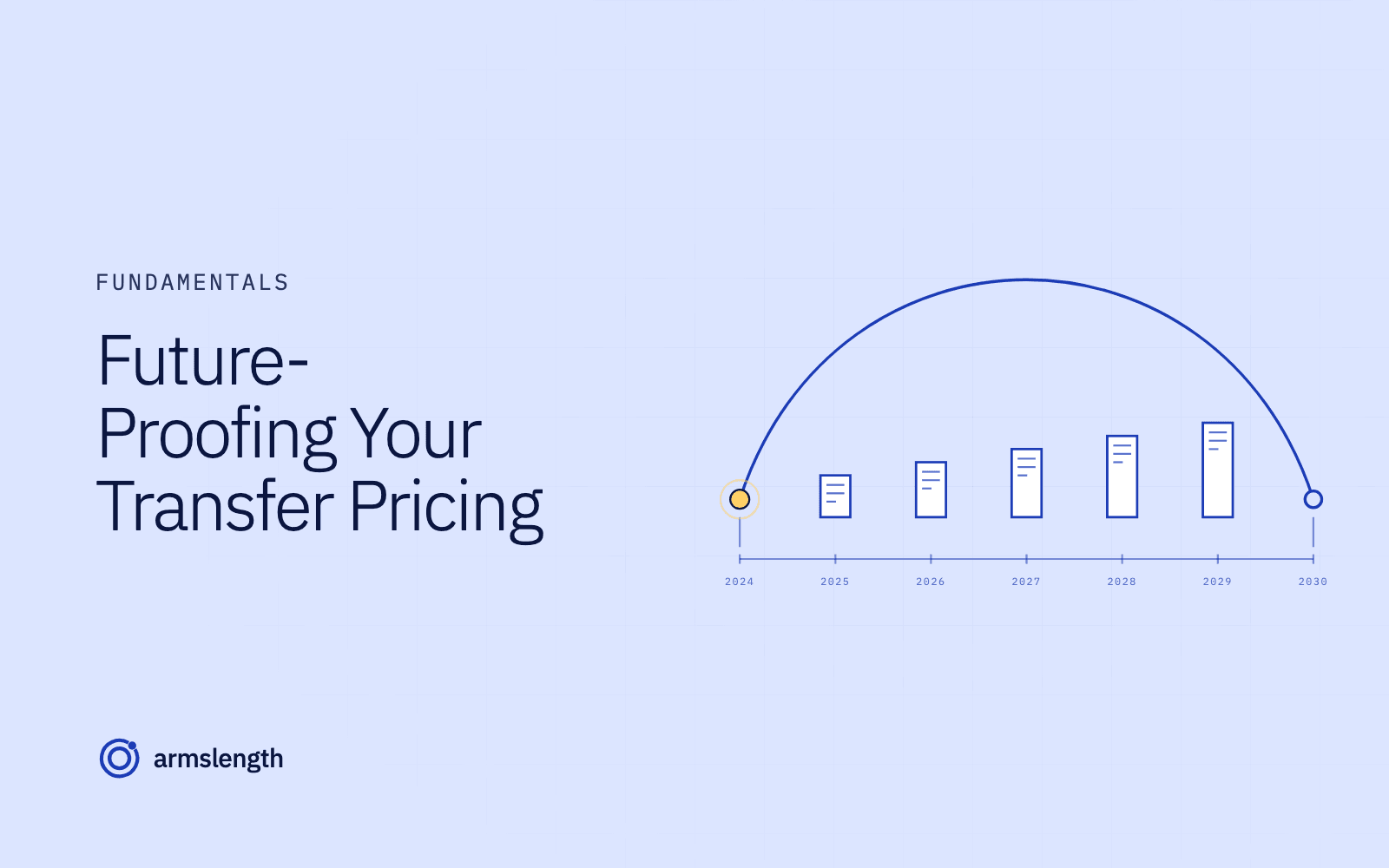
Today's transfer pricing decisions will inevitably face scrutiny years down the road under evolving standards and interpretations, creating a 'transfer pricing time paradox' that many organizations overlook.
Internal transfer prices, minimum transfer prices, market-based transfer prices, and OECD arm's length prices are often confused. This guide separates management accounting concepts from tax transfer pricing documentation.
What is an APA in transfer pricing? Learn about unilateral, bilateral, and multilateral APAs, the application process, timeline, costs, and when pursuing an APA makes sense.
A transfer-pricing guide to arm's length transactions: how related-party conditions are tested, documented and distinguished from the broader commercial meaning.
More resources for your next workflow stepMore resources for your next workflow step
Browse the full resource library or contact us if you want recommendations for your specific use case.
Today's transfer pricing decisions will inevitably face scrutiny years down the road under evolving standards and interpretations, creating a "transfer pricing time paradox" that many organizations overlook. Historical patterns, evidenced by recent high-profile cases like Coca-Cola and BlackRock, show how seemingly robust policies can collapse when documentation and rationale aren't future-proofed. To address this, companies must build robust foundations—clearly documenting methodology, implementation processes, and decision-making rationales—to withstand future audits. Preparing now by closing documentation gaps, aligning substance with form, and establishing systematic policy reviews prevents today's decisions from becoming tomorrow's costly challenges.
When I joined the transfer pricing world in the early 2010s, I was struck by a sobering realization: the decisions we were helping clients make would likely face scrutiny half a decade later, under different standards, different regulations, and possibly defended by different teams. This temporal disconnect is perhaps the most underappreciated aspect of transfer pricing work.
Since then, I've witnessed numerous transfer pricing professionals trying to defend positions taken by their predecessors, often with incomplete documentation, unclear rationales, and missing evidence. The pattern is both predictable and avoidable, which is why I'm sharing these observations and recommendations.
1. The long tail of transfer pricing decisions
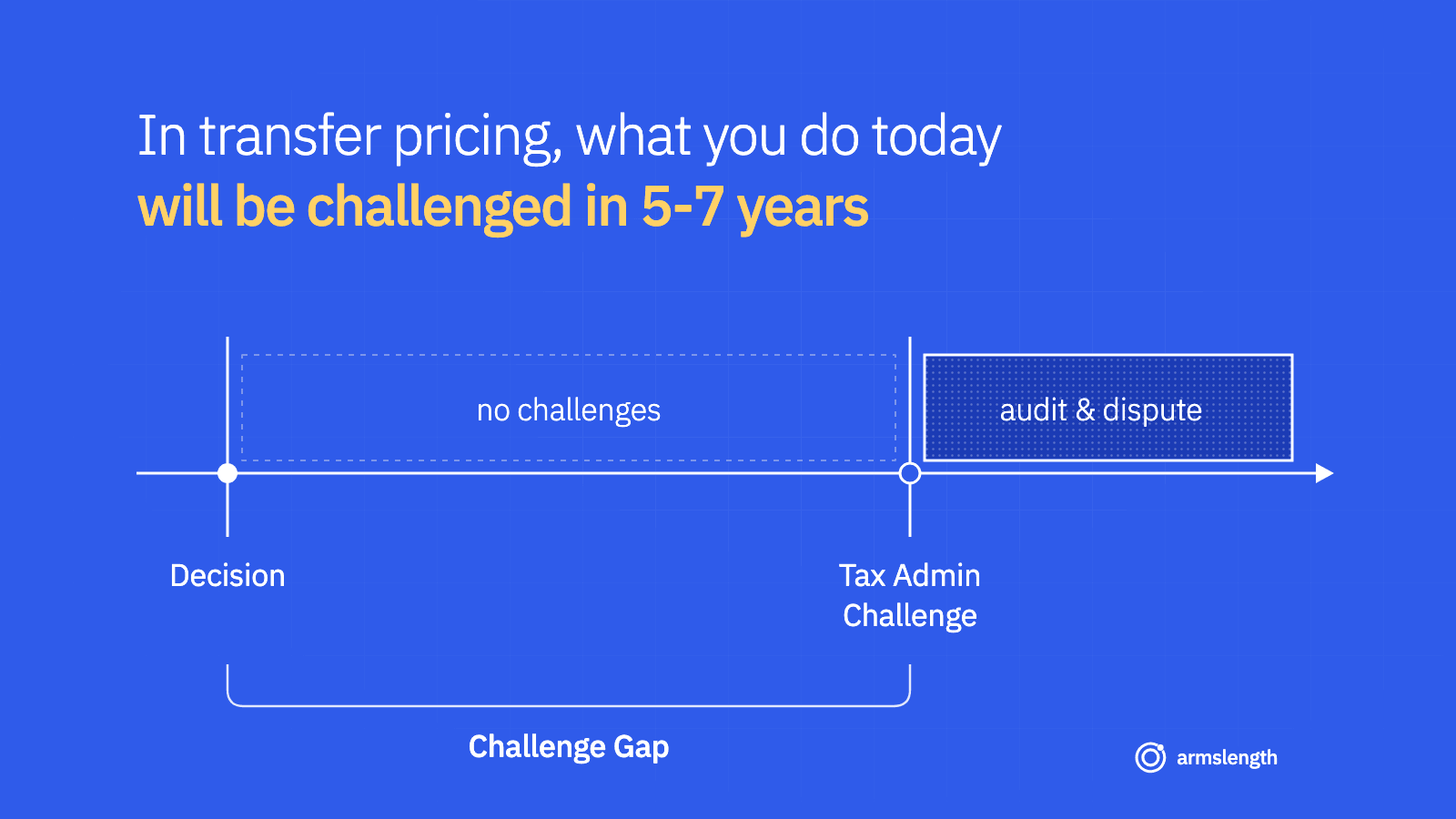
Transfer pricing disputes follow an almost mathematical pattern. You establish intercompany pricing policies today. You implement them over the next few years. Tax authorities examine them several years later, often using interpretations of arm's length principles that have evolved since your initial decision-making.
This creates what we call the "transfer pricing time paradox" - you must make decisions using today's best practices that will be defensible under tomorrow's standards. This isn't merely a theoretical concern but a practical reality that every multinational must address in its transfer pricing strategy.
Transfer Pricing Timeline
Year 0
Years 1-3
Years 4-6
Years 5-8
Years 7-10
Policy Established
Transfer pricing policies are established with benchmarking studies.
Policy Implementation
Policies are implemented with possible minor adjustments as business evolves.
Tax Returns Filed & Reviewed
Tax returns with these positions are filed and initially reviewed by tax authorities.
Transfer Pricing Audits Begin
Detailed transfer pricing audits may begin, often using evolved interpretations.
Disputes Reach Resolution
Significant disputes reach litigation or settlement, often under different standards.
This timeline illustrates how transfer pricing decisions made today will face scrutiny years later, potentially under different standards and interpretations.
2. Historical patterns in transfer pricing challenges
The timeline of transfer pricing disputes reveals a consistent lag between implementation and examination:
Implementation year (Year 0): Policies established, benchmarking conducted
Years 1-3: Policies implemented, with possible minor adjustments
Years 4-6: Tax returns with these positions are filed and initially reviewed
Years 5-8: Detailed transfer pricing audits may begin
Years 7-10: Significant disputes reach litigation or settlement
This pattern means that transfer pricing professionals are constantly operating in multiple timeframes simultaneously. The positions you're defending today were likely established years ago, while the positions you're establishing today will be defended years in the future.
Transfer pricing time paradox
3. Recent high-profile cases and their implications
The pattern becomes evident when examining recent high-profile transfer pricing disputes:
Coca-Cola: The U.S. Tax Court case centered on transactions from 2007-2009, yet the decision wasn't rendered until 2020. The IRS challenged the company's established practice of allocating profits to manufacturing entities rather than the U.S. parent, despite having previously accepted similar positions.
BlackRock: The dispute over a 2009 transaction wasn't resolved until over a decade later. The case involved complex intercompany arrangements that, while compliant with contemporaneous standards, were later scrutinized under evolved interpretations.
Rio Tinto: The Australian Tax Office challenged the pricing of aluminum sales from 2015, with proceedings spanning several years. What seemed like reasonable commodity pricing at the time faced intensive retrospective examination.
These cases illustrate how transfer pricing disputes can emerge long after the original decisions were made, often involving judgments based on standards that have evolved since implementation.
4. Building robust transfer pricing foundations
The long-term nature of transfer pricing risk means that documentation isn't merely a compliance exercise but a strategic investment in future defense. A robust foundation includes:
Comprehensive economic analysis documentation: Beyond the numerical results, document your methodology choices, alternatives considered, and reasons for selecting particular approaches.
Implementation and monitoring processes: Establish clear processes for how transfer pricing policies translate into actual intercompany pricing, including systems configurations, approval workflows, and regular monitoring protocols.
Decision audit trails: Maintain detailed records of key decisions, including meeting minutes, email exchanges, and technical memos that capture the reasoning behind significant transfer pricing choices.
Systematic review procedures: Establish regular review cycles that evaluate whether existing policies remain appropriate given changing business circumstances and evolving regulatory interpretations.
Archiving systems: Implement robust archiving for all transfer pricing documentation so future teams can access final reports, underlying analysis, data, and decision rationale.
Note
Documentation isn't merely a compliance exercise but a strategic investment in your future defense against transfer pricing audits.
5. Common vulnerabilities in current approaches
Several aspects of current transfer pricing practices may prove particularly vulnerable to future scrutiny:
Benchmarking strategies: Many companies rely on database searches without adequately documenting search criteria, rejection rationales, or adjustments. Future auditors may question these choices if the documentation doesn't clearly establish their reasonableness. Our Benchmarking Study Guide provides detailed methodology to avoid these pitfalls.
Entity characterizations: Functional profiles that seem clear today may be questioned later if the documentation doesn't thoroughly substantiate the characterization with detailed functional analysis and supporting evidence.
Profit allocations: The allocation of risks and profits may face heightened scrutiny, particularly as global tax authorities increasingly focus on substance over form and value creation alignment.
Implementation gaps: Many companies have well-documented policies but insufficient documentation of how those policies translate into actual prices, creating vulnerabilities when tax authorities examine implementation.
6. Creating a defensible audit trail
The foundation of future-proof transfer pricing is a comprehensive audit trail that connects every aspect of your transfer pricing approach:
Policy establishment: Document the economic principles, business rationale, and tax considerations that shaped your transfer pricing policies.
Implementation mechanisms: Record how policies translate into actual intercompany pricing, including system configurations, calculation methodologies, and responsible parties.
Monitoring and testing: Establish and document regular testing procedures that verify compliance with established policies and identify necessary adjustments.
Adjustment processes: Document any pricing adjustments, including the rationale, calculation methodology, and accounting treatment.
Annual documentation: Ensure that documentation not only satisfies minimum compliance requirements but creates a coherent narrative linking policies to implementation to results.
Warning
The most common pitfall is treating transfer pricing documentation as a compliance exercise rather than strategic risk management.
7. Preparing for future regulatory shifts
While we cannot predict specific regulatory changes, certain trends are likely to intensify:
Substance requirements: Expectations regarding economic substance behind intercompany arrangements will continue to increase, with greater scrutiny of decision-making capabilities and control over risks.
Value creation alignment: The focus on aligning profit allocation with value creation will sharpen, requiring more rigorous documentation of how intercompany pricing reflects value-creating activities.
Digitalization impact: As business models continue to digitalize, transfer pricing approaches for intangibles, services, and data will face evolving interpretations and standards.
Transparency obligations: Reporting requirements will likely expand, requiring companies to provide increasingly granular information about their global operations and profit allocation.
8. Practical steps for future-proofing your transfer pricing
To ensure your current transfer pricing approach can withstand future scrutiny, consider these practical steps:
Conduct a documentation gap analysis: Evaluate your existing documentation against potential future scrutiny standards, identifying areas where additional detail or explanation would strengthen your position.
Implement centralized archiving: Establish a centralized repository for all transfer pricing documentation, including not just final reports but supporting analysis, data sources, and correspondence.
Document methodology choices: Create technical memos explaining the rationale behind key methodology decisions, providing future defenders with insight into your reasoning.
Strengthen implementation documentation: Develop clear documentation linking policies to actual pricing mechanisms, including system configurations and calculation methodologies.
Establish regular policy reviews: Implement a systematic process for evaluating whether existing transfer pricing policies remain appropriate given evolving business operations and regulatory interpretations.
Tip
When defending positions established by predecessors, focus on reconstructing the original rationale through available documentation and identifying key decision-makers who may still be accessible.
Final thoughts
As transfer pricing professionals, we are not merely protecting today's positions but laying the groundwork for future defense. Whether it's you or your successor standing before tax authorities years from now, the quality of today's decisions and documentation will determine the outcome.
Your transfer pricing will face scrutiny in 2030—the question is whether you're creating the foundation today that will allow it to withstand that scrutiny. By adopting a future-oriented perspective now, you can ensure that today's transfer pricing decisions don't become tomorrow's problems.
I'd be interested to hear about your experiences with defending historical transfer pricing positions. What strategies have you found most effective in creating defensible documentation? What challenges have you encountered when trying to understand and defend positions established by predecessors?
Frequently Asked Questions
How long should we retain transfer pricing documentation?
While most jurisdictions require retention for 5-7 years, the best practice is to maintain comprehensive documentation for at least 10 years. This longer timeframe aligns with the typical dispute cycle and ensures that evidence is available if challenges arise. For particularly significant transactions or restructurings, consider indefinite retention of core documentation.
What specific documentation elements are most often missing when defending historical positions?
From my experience, the most frequently missing elements include:
Detailed explanations of benchmarking search criteria and comparables rejection rationales
Evidence of how policies were actually implemented in practice (beyond the policy itself)
Contemporaneous business reasoning for key decisions (especially when policies deviate from "standard" approaches)
Documentation of how year-end adjustments were calculated and implemented
Records of consultations with business units about functional profiles and risk allocation
How can we balance creating robust documentation with resource constraints?
Focus on a tiered approach:
Identify your highest-risk/highest-value transactions and allocate proportionate resources to their documentation
Develop standardized templates and processes for routine transactions
Consider using technology solutions to automate repetitive documentation elements
Integrate documentation into business processes rather than treating it as a separate compliance exercise
Budget for documentation as part of the transfer pricing implementation, not as an afterthought
How can we prepare for regulatory changes that haven't happened yet?
While specific changes are unpredictable, certain principles will remain constant. Focus on:
Aligning economic substance with contractual arrangements
Documenting business rationale beyond tax considerations
Ensuring value creation narratives are supported by actual business operations
Building flexibility into your transfer pricing framework to accommodate policy adjustments
Maintaining awareness of global trends in transfer pricing enforcement and regulation
What's the most common mistake companies make when preparing for future scrutiny?
The most common mistake is treating transfer pricing documentation as a compliance exercise rather than strategic risk management. Companies often focus on meeting minimum requirements rather than creating documentation that tells a coherent story about their business and transfer pricing approach. This minimalist approach may satisfy current filing requirements but creates significant risk when defending positions years later.
How do we ensure continuity of transfer pricing knowledge when team members change?
This is a critical challenge given the long timeframes of transfer pricing disputes:
Develop comprehensive transfer pricing manuals that capture not just policies but implementation details
Create and maintain technical memos explaining key decisions and methodologies
Implement structured knowledge transfer protocols when team members transition
Maintain centralized and well-organized documentation repositories with clear indexing
Consider periodic recorded interviews with key team members about major transfer pricing decisions
What role does technology play in future-proofing transfer pricing?
Technology will be increasingly essential:
Data management systems can maintain historical pricing and transactional data
Documentation automation tools can ensure consistency across years and jurisdictions
Workflow systems can track approvals and decisions, creating audit trails
Analytics tools can help identify potential risks before they become issues
Digital archiving solutions can ensure documentation remains accessible for the necessary timeframes
For organizations seeking to leverage technology in their transfer pricing processes, our NACE Code Selector tool provides a starting point for accurate industry classification in benchmarking studies.
How should we approach transfer pricing audits for periods implemented by previous teams?
When defending positions established by predecessors:
Begin by reconstructing the original rationale through available documentation
Identify key decision-makers who may still be accessible, even if no longer with the company
Focus on the contemporaneous regulatory environment and standards
Avoid contradicting past positions unless absolutely necessary
Be prepared to explain evolution in approaches over time if current practices differ
How often should we review and update our transfer pricing policies?
Ideally, transfer pricing policies should be reviewed:
Annually for routine consistency checks
Every 2-3 years for comprehensive evaluation
Immediately following significant business changes (restructurings, acquisitions, new product lines)
When relevant regulatory changes occur
When benchmark studies reach the end of their typical 3-year validity period
 Borys UlanenkoCEO of ArmsLength AI