Transfer Pricing Ranges: How Quartile Calculations Vary WorldwideTransfer Pricing Ranges: How Quartile Calculations Vary Worldwide
Discover how the interquartile range (IQR) is calculated differently across major tax jurisdictions and the practical implications for your transfer pricing documentation and audit defense.
BorysCEO of ArmsLength AI
15min read
Contents↓
Contents
TL;DR key takeaways
The IQR calculation method varies significantly between the IRS, OECD countries, India, and other jurisdictions, potentially affecting your arm's length range.
India uses a narrower 35th-65th percentile range compared to the standard 25th-75th percentile used by most other countries.
Canada takes a fundamentally different approach, considering the full range rather than statistical trimming.
Small differences in calculation methods can have material impacts on borderline cases, affecting compliance and audit outcomes.
Understanding jurisdiction-specific requirements is crucial for accurate documentation and successful audit defense.
We tested three AI configurations on 10 transfer pricing questions. ChatGPT with web search scored 83%, but models without web access fabricated most quotes. Here's what we learned.
The Berry Ratio (gross profit ÷ operating expenses) is a specialized PLI for low-risk distributors and agents. Learn when it's appropriate, when to avoid it, and how to defend your analysis—with calculation examples and jurisdictional guidance.
On November 10, 2025, HMRC updated INTM485120 with critical details on searching for comparables. The key takeaway? The Interquartile Range is not a default right - and relying on it blindly carries a median-sized risk.
More resources for your next workflow stepMore resources for your next workflow step
Browse the full resource library or contact us if you want recommendations for your specific use case.
1. Introduction to the Interquartile Range in Transfer Pricing
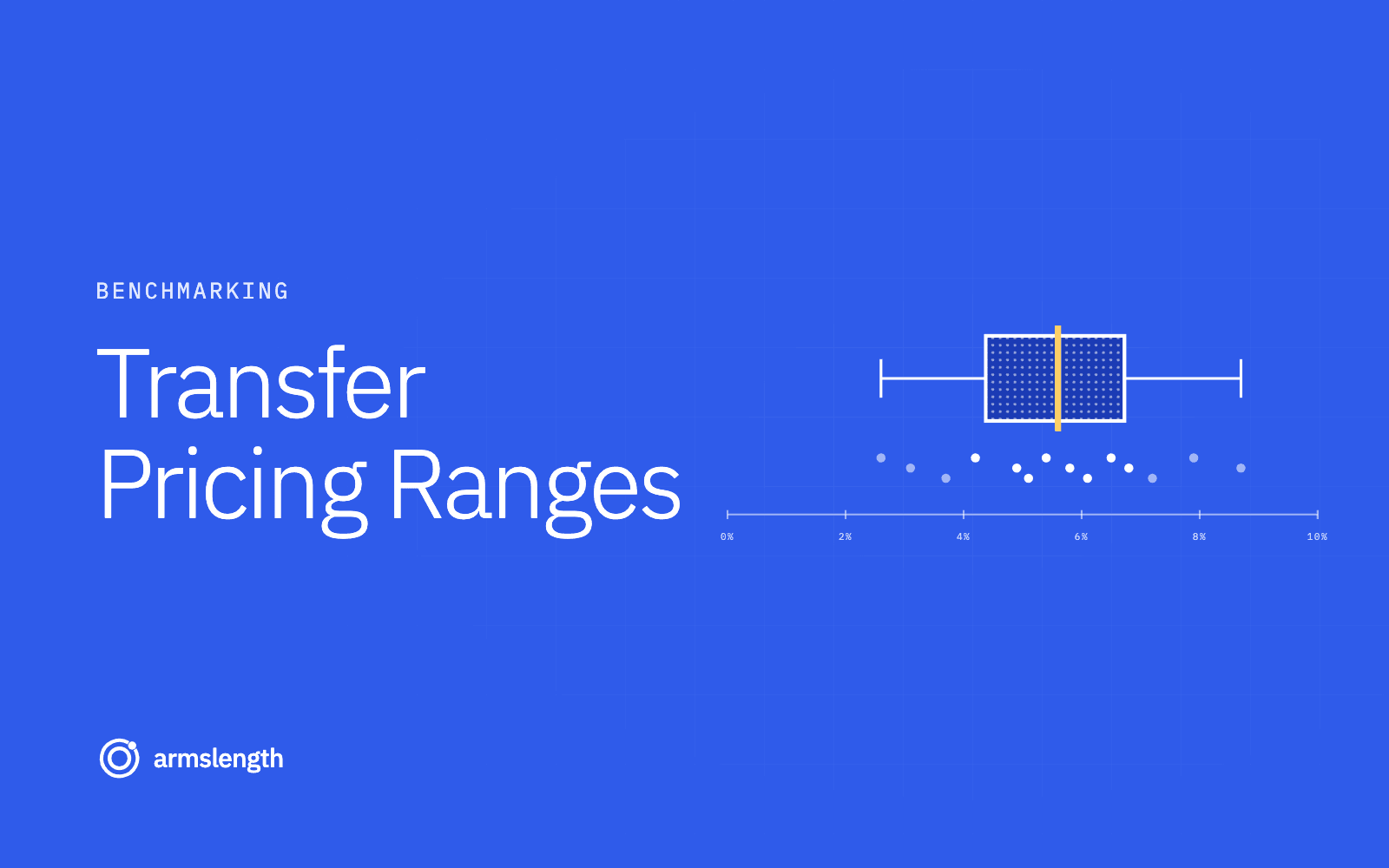
In transfer pricing, the arm's length range is often defined by the interquartile range (IQR) – the range between the 25th and 75th percentiles of results derived from uncontrolled comparables. This approach helps mitigate the impact of outliers and comparability imperfections by focusing on the middle 50% of data points.
While the IQR concept is widely adopted across jurisdictions, the exact method of calculating the 25th and 75th percentiles can vary significantly. Key differences include whether quartiles are computed using an inclusive vs. exclusive method (i.e., whether the median is included in sub-calculations), how values are averaged or interpolated when the percentile falls between two data points, and even which percentile range is used (some countries use a narrower range than 25th–75th).
These methodological nuances can lead to subtle differences in the numeric range and have practical implications for transfer pricing documentation, audit defense, and potential disputes. In this post, I'll provide a jurisdiction-by-jurisdiction analysis of how the IQR is determined under U.S. IRS rules versus other major regimes, including the precise calculation methods and illustrative Excel formulas.
Note
The interquartile range (IQR) calculation method chosen can materially impact whether your tested transaction falls within the arm's length range, especially in borderline cases.
2. United States (IRS Guidelines)
Under U.S. tax regulations, the IRS has a well-defined procedure for calculating the interquartile range. Treasury Regulations specify that the IQR is the range from the 25th to the 75th percentile of the comparable results. The 25th percentile is defined as "the lowest result derived from an uncontrolled comparable such that at least 25 percent of the results are at or below the value of that result."
Calculation Method
The IRS method effectively uses an exclusive quartile approach in that it does not always include the median in defining the quartile boundaries. Instead, it finds the cutoff where a quarter of observations lie below. Notably, the IRS method will only produce a midpoint (averaged value) when the percentile falls exactly on a data point. In all other cases, the quartile will equal one of the actual comparable data points.
If exactly 25% of observations are at or below a particular value, then the 25th percentile is the average of that value and the next higher value. The 75th percentile is determined analogously.
Excel Formula (IRS Method)
To replicate the IRS quartile computation in Excel, you can use a combination of COUNT, SMALL, and conditional logic:
If a tested result falls outside this IQR-based range, IRS practice is to adjust to the median (50th percentile) of all comparables. This emphasis on the median for adjustments underscores the IRS's preference for the midpoint of the range as the most reliable point.
3. OECD Guidelines and OECD Countries
The OECD Transfer Pricing Guidelines also recognize that applying a range of results is often necessary, and they specifically mention the interquartile range as a useful statistical tool for enhancing reliability. However, the OECD does not prescribe a specific formula or method for calculating the 25th and 75th percentiles.
Calculation Method
Since OECD countries have no uniform mandate, the method for calculating quartiles can vary. Typically, practitioners use one of the common statistical methods:
The exclusive method (which excludes the median when splitting the data to find Q1 and Q3)
The inclusive method (which includes the median in both halves)
Unlike the IRS, which largely avoids interpolation except at exact quartiles, many OECD practitioners will use linear interpolation to compute percentiles. For example, Excel's default PERCENTILE/QUARTILE function (now PERCENTILE.INC) calculates quartiles by linear interpolation between data points.
OECD member states generally consider the 25th–75th percentile range as the arm's length range when applying methods like TNMM (Transactional Net Margin Method) or profit splits, provided the full range appears too wide due to comparability issues. The OECD Guidelines themselves emphasize that if all comparables are equally reliable, the full range could be used, but in practice tax administrations often favor the narrowed IQR.
Tip
When documenting for OECD countries, using Excel's built-in functions (PERCENTILE.INC or QUARTILE.INC) is generally acceptable without needing to show the calculation methodology in detail.
4. India's Unique Approach
India's transfer pricing regulations historically differed from the OECD norm, but in recent years India introduced a range concept to align more closely with global practices. Notably, India uses a narrower percentile range than the classical IQR.
35th–65th Percentile Range
Under Rule 10CA of the Indian Income-tax Rules (introduced by the Finance Act 2015), if there are sufficient comparables, the arm's length range is defined between the 35th and 65th percentiles of the dataset (not the 25th and 75th). This applies when the dataset contains at least six comparables; if fewer are available, India falls back to using the arithmetic mean with a specified tolerance band.
This narrower middle 30% range was chosen to tighten the acceptable outcomes. If the tested party's result falls within the 35th–65th percentile range, no adjustment is required; if it falls outside, the regulations mandate that the result be adjusted to the median (50th percentile) of the comparables.
Calculation Method
India's rules detail a calculation method very similar to the IRS approach, just applied to the 35th and 65th percentiles. The rule effectively states:
Calculate n * 35% to find the position for the lower bound
If this calculation lands on a whole number rank, take the average of the value at that rank and the next value
If it's not a whole number, round up to the next rank and take that value as the 35th percentile
The 65th percentile is computed in the same manner.
In India, practitioners must be careful to compute percentiles exactly as prescribed in Rule 10CA. Using a standard Excel PERCENTILE function might give a slightly different value at the margins, which could lead to compliance issues.
5. Ukraine: Prescriptive IQR and Adjustment Rules
Ukraine prescribes a formal, algorithmic construction of the arm's length range via Cabinet Resolution No. 381 (2015), supported by Article 39 of the Tax Code. This makes Ukraine one of the jurisdictions with the most clearly codified IQR methodology.
Calculation Method
Practitioners must follow a specific procedure:
Sort the dataset of comparables (excluding the controlled result)
Compute Q1, median, and Q3 using rank-based rules:
When 0.25·n, 0.5·n, or 0.75·n is an integer, average the observation at that rank with the next
Otherwise, take the next integer rank
The arm's length range is defined as Q1–Q3
Excel Formulas (Ukraine Method)
The Ukrainian method uses the same calculation approach as the IRS but applied to the standard 25th/75th percentiles:
Taxpayer self-adjustment: Taxpayers may voluntarily adjust to the nearest boundary of the range (Q1 or Q3) within the statutory window, typically without penalties
Tax authority adjustment: Following an audit, authorities may adjust to the median of the IQR
Tip
Ukraine mandates a formal IQR with explicit rank rules; taxpayers self-adjust to Q1/Q3, while audit adjustments often use the median.
6. Australia's Approach
Australia follows the OECD guidance in endorsing the use of statistical tools like the interquartile range for transfer pricing analyses. The Australian Taxation Office's Taxation Ruling TR 97/20 explicitly allows using statistical techniques (including IQR) to enhance reliability when data quality is a concern.
Calculation Method
Since no specific method is imposed by law, Australian practitioners generally compute the 25th and 75th percentiles using standard statistical methods (similar to those described under OECD above). Many firms simply use software or Excel to determine the quartiles. The approach would typically mirror the inclusive/linear interpolation method.
Excel Formula
A simple approach widely accepted in Australia is:
Australian guidance (TR 97/20) actually references the U.S. approach as an example of using IQR to address unreliable data. This indicates that using IQR is considered an extension of internationally accepted practice.
7. European Union Member States
In the EU, transfer pricing regulations are grounded in the OECD Guidelines, and most EU member states employ the interquartile range concept for statistical robustness. There is no EU-wide formula for calculating quartiles – each country's practice is aligned either with OECD guidance or influenced by local precedent.
Calculation Method
EU countries largely do not codify a specific percentile calculation procedure in their legislation or guidance – they rely on conventional statistical determination of quartiles. In practice, this means a taxpayer can use any robust statistical method (median-of-halves or interpolation) and the results will be accepted as the 25th and 75th percentiles.
Most often, practitioners simply use statistical software or Excel. Because of this, the inclusive linear interpolation approach is frequently the implicit standard (since Excel's default quartile calculation is inclusive).
The difference between methods is marginal, and European tax authorities generally do not mind as long as the 25th percentile is around where 25% of data lie below it (and similarly for 75th). In presentations to EU tax administrations, companies typically just report quartile values, sometimes even rounded, without debate on how they were derived.
Suppose a set of comparables' operating margins (in %) are: 3.1, 5.0, 5.5, 6.2, 7.1, 8.4, 10.0 (seven observations). A UK analyst might calculate:
Q1: The median of the lower half (3.1, 5.0, 5.5) which is 5.0
Q3: The median of the upper half (6.2, 7.1, 8.4, 10.0) which would be 7.75 (average of 7.1 and 8.4)
Another approach might yield slightly different values, but in practice, either would be acceptable in the documentation as long as the range is roughly capturing the middle 50%.
8. Canada (CRA): Full Range Approach
Canada takes a fundamentally different approach from most other jurisdictions. The Canada Revenue Agency (CRA) does not default to trimming by interquartile range when comparables are reliable.
Range Concept
CRA typically considers the full range of results and relies on qualitative comparability to address outliers rather than a mechanical statistical filter. In practice, outliers are handled through careful comparability screening and adjustments at the selection stage, not by automatically narrowing to an IQR after the fact.
No Automatic Median Adjustment
There is no automatic rule to adjust to the median when a tested result sits outside a trimmed range; point selection is case-specific and depends on the specific facts and circumstances. CRA guidance emphasizes current-year testing, with multi-year data serving as context, not a mask for a single-year outcome (TPM-16).
Penalty Framework
Section 247 penalties (10% on certain adjustments) reinforce the expectation of robust, qualitative comparability—not mechanical statistics. This creates an incentive for taxpayers to invest in high-quality comparable selection rather than relying on statistical adjustments.
Note
Canada does not default to IQR trimming; CRA typically considers the full, qualitatively reliable range and does not mandate median adjustments.
9. Comparative Summary of Quartile Calculation Methods
Now that we've explored each jurisdiction individually, here's a comprehensive summary comparing the key aspects of IQR calculation across all discussed jurisdictions:
Jurisdiction
Arm's Length Range
Calculation Method
Adjustment Approach
United States (IRS)
25th–75th percentile
Rank-based: Q1 is lowest value with ≥25% below; if exactly 25%, average with next
Adjust to median
OECD (General)
25th–75th percentile
No mandated formula; typically linear interpolation or median-of-halves
Typically to median
India
35th–65th percentile
Rank-based (same as IRS method but 35%/65% thresholds)
Mandatory adjustment to median
Ukraine
25th–75th percentile
Rank-based (codified by Resolution 381): if rank is integer, average with next; otherwise next integer
Taxpayer to Q1/Q3; authority to median
Australia
25th–75th percentile
No explicit rule; follows OECD/standard statistical practice
Case-specific
EU Countries
25th–75th percentile
Follows OECD Guidelines; generally uses standard statistical definitions
Varies by country
Canada (CRA)
Full range (no default IQR)
Considers full, qualitatively reliable range; outliers via comparability screening
Case-specific, no mandated median
Note: Detailed Excel formulas for each jurisdiction are provided in their respective sections above.
Key Observations
Most codified: U.S. (IRS), India, and Ukraine have the most explicit regulatory requirements
Most flexible: Canada, OECD countries, Australia, and EU allow practitioner discretion
Narrowest range: India (35th-65th percentile)
Unique approach: Canada (full range, no statistical trimming)
Similar methodologies: IRS, India, and Ukraine use rank-based calculations; main differences are percentile thresholds
10. Practical Implications for Transfer Pricing Documentation and Risk Management
The differences in how quartiles are calculated can have practical consequences in transfer pricing analysis:
Borderline Cases and Compliance
If a tested result is near the edge of the arm's length range, small methodological differences might determine whether it falls inside or outside the range. For example, using a strict IRS method vs. Excel's interpolated percentile could yield a 25th percentile of, say, 5.0% vs 5.2%. A tested margin of 5.1% would be outside the range in one method and inside in another.
In jurisdictions like the U.S., India, and Ukraine where the methodology is codified, it's important for taxpayers to use the prescribed calculation to avoid such discrepancies. In documentation, companies should state the methodology used to compute the quartiles to preclude challenges.
Transfer Pricing Documentation
Multinational enterprises preparing global transfer pricing documentation need to be mindful of local differences. A Master file or global study might present an IQR using a generic statistical method (often simply using 25th–75th via Excel). However, local files in jurisdictions with specific requirements should reflect the local calculation approach.
For example, a global benchmark might show an interquartile range of 8–15% margin, but:
The Indian local file would recompute the 35th–65th percentiles of those same comparables, perhaps yielding a narrower range like 9–14%
The Canadian local file might present the full range without IQR trimming
The Ukrainian local file must use the prescribed rank-based method
Ensuring consistency with local definitions helps support the taxpayer's position in audits.
Audit Defense
Tax authorities often scrutinize whether the taxpayer's result is within the arm's length range. In the U.S., IRS auditors will rely on the IRS-defined IQR; they might recompute the quartiles per the regulations to verify the taxpayer's claims.
Any mistake in calculating quartiles (e.g., using the wrong method or data order) can shift the range and potentially move the tested result outside of it. The stakes are particularly high in jurisdictions with:
India: Narrow range and mandatory median adjustment
Ukraine: Prescriptive methodology with audit consequences
U.S.: Well-defined regulatory requirements that auditors will verify
Key point
Include explicit calculations with appropriate formulas or clear descriptions in your documentation to demonstrate compliance with jurisdiction-specific requirements, especially for the U.S., India, and Ukraine.
Consistency and Transparency
Differences in quartile methodology also imply that multi-jurisdictional analyses need careful consistency. If a company uses a single set of comparables for several countries, theoretically the IQR should be the same worldwide if the method is the same. But if the U.S. report uses the IRS method and another country's report uses a pure Excel percentile, the numerical values could differ slightly.
Tax authorities may exchange information (especially under country-by-country reporting frameworks), so inconsistencies could raise questions. Thus, some firms choose to adopt the strictest common approach across all analyses for simplicity – e.g., using the IRS's discrete method globally, or always using linear interpolation globally – and then explain the approach in documentation.
For Canada, the full-range approach requires a different documentation strategy focused on demonstrating the qualitative reliability of all comparables rather than statistical narrowing.
Final Thoughts
Although the concept of the interquartile range is universal in modern transfer pricing, the calculation details can differ significantly by jurisdiction. The IRS, India, and Ukraine provide clear rule-based methods, while the OECD and most other countries allow more statistical freedom. Canada takes an entirely different approach by focusing on the full range with qualitative screening.
For practitioners, it is crucial to apply the correct method for the country in question, not only to comply with regulations but also to ensure that the arm's length test is as favorable as the rules allow. By including explicit calculations and references in documentation, taxpayers can demonstrate compliance with each jurisdiction's expectations and thereby mitigate the risk of disputes over how the arm's length range was determined.
Properly handling these nuances in IQR computation strengthens the credibility of a transfer pricing analysis in the eyes of examiners and courts, contributing to more robust audit defense and a lower risk of transfer pricing adjustments on technical grounds.
Frequently Asked Questions
What is the interquartile range (IQR) in transfer pricing?
The interquartile range (IQR) is a statistical measure that represents the middle 50% of a dataset, spanning from the 25th to the 75th percentile of the data. In transfer pricing, it's widely used to define the arm's length range when analyzing comparable company data, helping to eliminate outliers and focus on the most reliable portion of the data.
Why do different countries calculate the IQR differently?
Different tax authorities have developed their own methodologies based on their statistical preferences, policy objectives, and historical practices. Some jurisdictions like the U.S., India, and Ukraine have codified specific calculation methods in their regulations, while others follow general statistical practice. India has adopted a narrower range (35th-65th percentile) to further tighten the acceptable range of outcomes, while Canada eschews IQR trimming entirely.
How significant are the differences between IQR calculation methods?
For large datasets with many comparables, the differences are typically minimal. However, for smaller datasets (which are common in transfer pricing) or in borderline cases, the differences can be material enough to determine whether a tested transaction falls inside or outside the arm's length range, potentially affecting tax liabilities.
Should I use the same IQR calculation method for all countries?
While using a consistent approach globally can simplify documentation, it's safest to follow each jurisdiction's prescribed or commonly accepted method. This is particularly important for countries with specific regulatory requirements like the U.S., India, and Ukraine. Your master file might use one method, while local files should adapt to local requirements. Canada requires a fundamentally different approach focusing on the full range.
What happens if my tested transaction falls outside the arm's length range?
In most jurisdictions, if a tested result falls outside the arm's length range, an adjustment is typically made to bring the result within the range. The IRS, India, and most OECD countries typically adjust to the median (50th percentile) of the comparables. Ukraine allows taxpayer self-adjustment to Q1/Q3 but may adjust to median on audit. This can result in additional tax liability, so it's important to ensure your range is calculated correctly.
Should I indicate which IQR calculation method I've used in my documentation?
Yes, especially for jurisdictions with specific requirements like the U.S., India, and Ukraine. Clearly stating your calculation methodology, potentially with formulas or examples, demonstrates transparency and compliance with local regulations. This clarity can help prevent disputes during tax audits and strengthen your position.
Can I use Excel's built-in functions for calculating quartiles in all jurisdictions?
While Excel's PERCENTILE.INC or QUARTILE.INC functions are widely accepted in OECD, EU countries, and Australia, they may not precisely match the regulatory requirements in the U.S., India, or Ukraine. For these jurisdictions, custom formulas that implement the specific regulatory definitions are preferable to ensure compliance.
How does India's narrower range impact transfer pricing compliance?
India's 35th-65th percentile range creates a narrower compliance window than the standard IQR, making it more challenging for tested transactions to fall within the arm's length range. This increases the importance of careful comparable selection and precise range calculation to avoid adjustments to the median.
How does Canada's approach differ from other jurisdictions?
Canada is unique in not defaulting to IQR trimming. The CRA considers the full range of comparables when they are qualitatively reliable, handling outliers through comparability screening rather than statistical filtering. This requires a different documentation approach focused on demonstrating the quality of comparable selection rather than statistical range narrowing.
Are there any other countries besides India that use non-standard percentile ranges?
Yes, some countries have adopted their own unique ranges. For example, Malaysia uses a 37.5th-62.5th percentile range, while Vietnam has adopted a 35th-75th percentile range. Always check the latest local regulations when preparing documentation for these jurisdictions.
 BorysCEO of ArmsLength AI