Cost Plus vs TNMM: Gross Mark-Up Method vs Net Margin MethodCost Plus vs TNMM: Gross Mark-Up Method vs Net Margin Method
Cost plus and TNMM can both use costs as a reference point, but they are not the same transfer pricing method. This guide explains gross mark-up vs net cost plus, when each method fits, examples, audit risks, and documentation points.
Borys UlanenkoCEO, ArmsLength AI
11min read
Contents↓
Contents
TL;DR key takeaways
The OECD cost plus method applies an arm's length gross mark-up to the supplier's direct and indirect costs of the controlled transaction.
TNMM tests net profitability. A net cost plus PLI compares operating profit to total costs and is not the same method as OECD cost plus.
Cost plus is stronger when reliable gross mark-up comparables and consistent cost-base data exist.
TNMM is often stronger when gross cost classification differs across companies but a routine tested party can be benchmarked at net level.
The key audit issue is method clarity: do not describe an EBIT/total-cost analysis as the cost plus method.
How to price contract and toll manufacturing arrangements: tested party selection, cost plus vs TNMM, cost-base design, capacity utilization, inventory and warranty risk, benchmarking, documentation, and audit issues.
How to price contract R&D arrangements: distinguishing routine research services from entrepreneurial IP development, DEMPE and risk control, cost plus vs TNMM, cost-base and mark-up issues, tax/accounting caveats, documentation, audit issues, and examples.
A practical guide to the Comparable Uncontrolled Price method: internal vs external CUPs, comparability thresholds, commodity pricing, adjustments, worked examples, common mistakes, and documentation points.
More resources for your next workflow stepMore resources for your next workflow step
Browse the full resource library or contact us if you want recommendations for your specific use case.
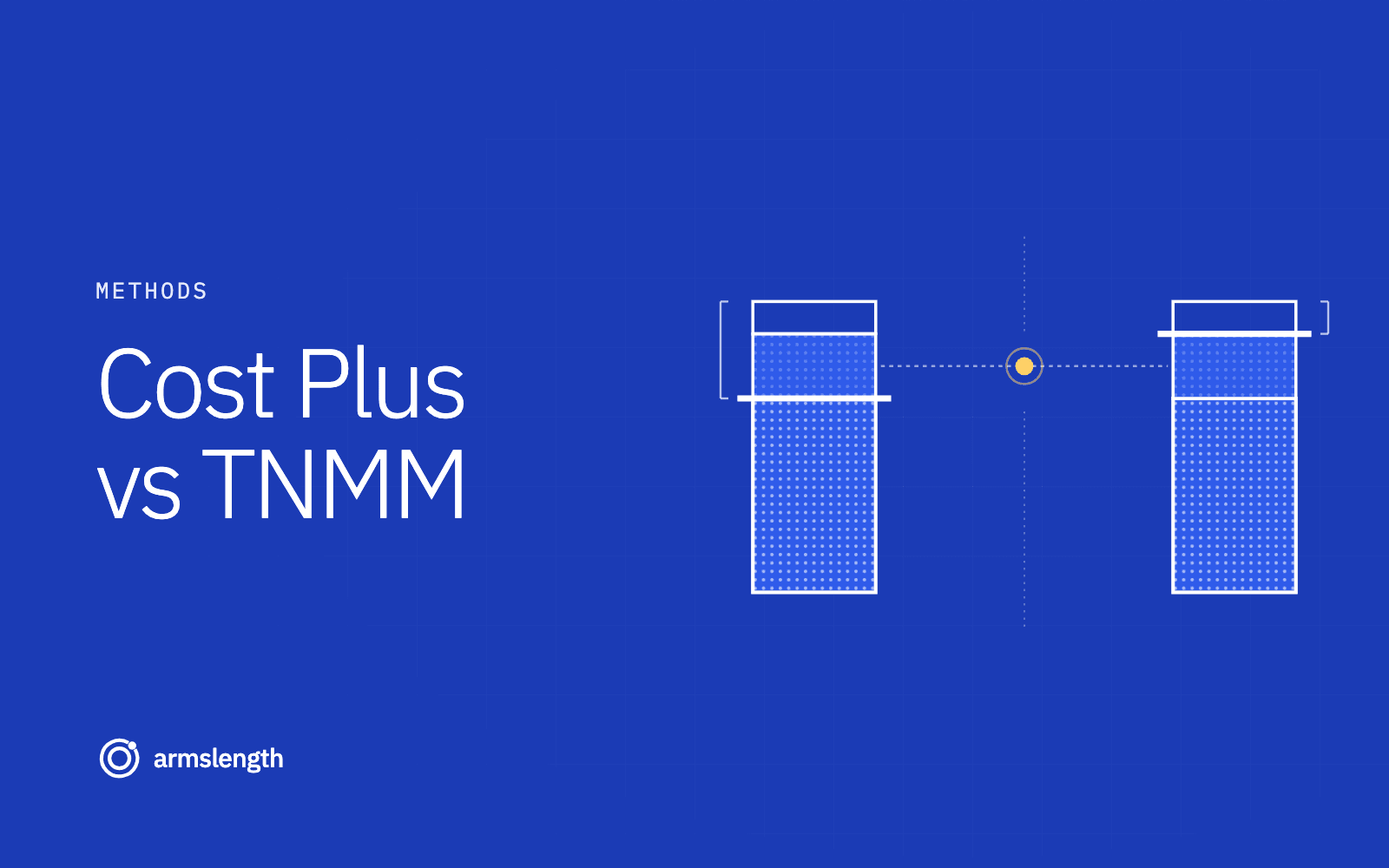
Cost plus and TNMM are different transfer pricing methods, even when both look at costs.
The cost plus method is a traditional transaction method. It starts with the supplier's costs for the controlled transaction and adds an arm's length gross mark-up. The tested profit line is gross profit, not operating profit. See the full cost plus method guide.
TNMM is a transactional profit method. It tests the net profit of a tested party relative to a base such as sales, assets, or total costs. When TNMM uses a net cost plus PLI, the calculation is usually:
Operating profit / Total operating costs
That is a net margin test, not the OECD cost plus method. For the broader TNMM framework, see CPM vs TNMM and the PLI selection guide.
Warning
Do not conflate the methods. OECD cost plus is a gross mark-up on costs. TNMM with a net cost plus PLI is a net profitability test. They may both be applied to routine manufacturers or service providers, but the profit line, cost base, comparables, and documentation logic are different.
Side-by-side comparison
Factor
Cost plus method
TNMM
Method family
Traditional transaction method
Transactional profit method
What it tests
Gross mark-up earned by the supplier
Net profit of the tested party
Typical formula
Price = Cost base x (1 + gross mark-up)
Net PLI = Operating profit / sales, costs, or assets
Cost-based metric
Gross profit / defined cost base
Operating profit / total costs, when using net cost plus
Typical tested party
Routine manufacturer, toller, or service provider
Less complex party without unique intangibles
Data requirement
Comparable gross mark-ups and consistent cost bases
Comparable net margins and reliable tested-party segmentation
Sensitivity
Highly sensitive to COGS and cost classification
Less sensitive to gross-line accounting differences, but still needs clean net accounts
Best fit
Reliable internal or external gross mark-up evidence exists
Gross data is unreliable but functional comparables exist at net level
Common audit challenge
Wrong cost base, pass-through costs, gross vs margin confusion
Cost plus is usually stronger when the controlled transaction is supplier-side and the supplier performs routine, well-defined activities.
Good fact patterns include:
Contract manufacturing where the principal owns product IP and market risk.
Toll manufacturing where the tested entity performs conversion services.
Routine intra-group services where the provider does not own valuable intangibles.
Semi-finished goods supplied under stable long-term arrangements.
Cases with a strong internal comparable, for example the same supplier provides comparable services to independent customers.
The method becomes persuasive when you can defend three things:
The supplier is the right tested party.
The cost base captures the controlled transaction consistently.
The gross mark-up comparables use a comparable cost base.
Note
describes cost plus as useful for semi-finished goods, joint facility or long-term buy-and-supply arrangements, and controlled services. The practical issue is not whether cost plus is accepted. It is whether the gross mark-up evidence is reliable enough.
When TNMM is usually the better method
TNMM is often better when a one-sided analysis is appropriate but gross-level comparability is too weak.
Use TNMM instead of cost plus when:
Comparable companies classify COGS and operating expenses differently.
Public data does not support reliable gross mark-up calculations.
The tested party's total operating cost base is more stable and meaningful than COGS alone.
You need to test a whole routine business segment rather than a narrow transaction.
Functional comparability is good enough, but product or service comparability is not strong enough for a traditional transaction method.
TNMM is not a free pass. It still requires a clear tested party selection, a suitable PLI, a defensible comparable search, and reliable segmentation of controlled transactions.
Tip
If the policy says "cost plus 7%" but the benchmark tests EBIT over total costs, the documentation should usually call the method TNMM with a net cost plus PLI, not the OECD cost plus method.
Common mistakes
1. Calling net cost plus "cost plus"
This is the most common mistake. A net cost plus PLI under TNMM uses operating profit and total costs. OECD cost plus uses gross profit and a defined transaction cost base.
The distinction matters because tax authorities may read the stated method literally. If the Local File says cost plus, they may ask for gross mark-up comparables and cost-base consistency at gross level.
2. Using the wrong cost base
Cost plus lives or dies on the cost base. Manufacturing COGS, service delivery costs, pass-through expenses, subcontractor costs, and overhead allocations must be mapped deliberately.
Some costs may be disbursements or agency-style pass-through items. Other third-party costs may involve procurement, coordination, quality control, or management value and may deserve a mark-up. The answer depends on the actual role performed.
4. Choosing TNMM only because it is easier
TNMM may be more practical, but method selection still follows the most appropriate method standard. If a reliable internal cost plus comparable exists, TNMM may be harder to defend.
5. Ignoring capacity and inefficiency
Cost plus can over-reward a supplier if excessive idle capacity or inefficiency is simply included in the cost base and marked up. TNMM can also distort outcomes if abnormal costs are not explained or adjusted.
Worked examples
Example 1: Cost plus for contract manufacturing
Facts: ManufacturingCo produces components for ParentCo. ParentCo owns product IP, sets specifications, and bears market risk. ManufacturingCo performs routine production.
Relevant production cost base: EUR 20 million
Arm's length gross mark-up from comparable contract manufacturers: 8%
Transfer price: EUR 20 million x 1.08 = EUR 21.6 million
This is a cost plus analysis because the return is tested at gross level against production costs.
Example 2: TNMM with net cost plus for a service center
Facts: ServiceCo provides routine back-office services to group entities. Its statutory accounts do not separate COGS and operating expenses meaningfully. Independent service providers report consistent net operating results but inconsistent gross classifications.
Total operating costs: EUR 10 million
Arm's length TNMM net cost plus range: 4% to 8%
Target net cost plus: 6%
Operating profit target: EUR 10 million x 6% = EUR 600,000
Recharge: EUR 10.6 million, subject to local service rules and cost-pool exclusions
This is TNMM, not cost plus, because the benchmark tests operating profit over total operating costs.
Documentation and audit angle
A defensible comparison should explain why one method is more reliable than the other for the actual facts.
For a cost plus file, document:
Why the supplier is routine and does not own unique intangibles.
The exact cost base and any excluded pass-through costs.
Whether the mark-up is gross mark-up or gross margin.
Internal comparable analysis before external database evidence.
Accounting consistency between the tested party and comparables.
For a TNMM file, document:
Why the tested party is the least complex party.
Why a net PLI is more reliable than a gross mark-up.
How controlled transactions are segmented.
Search strategy, accept/reject reasons, and comparability adjustments.
Whether the tested party falls within the arm's length range.
No. OECD cost plus applies a gross mark-up to the supplier's costs. TNMM tests net profitability using a PLI such as operating margin, return on assets, or net cost plus.
Is net cost plus a cost plus method?
No. In OECD method terminology, net cost plus is a PLI used under TNMM. It compares operating profit to total costs. It is not the same as the cost plus method, which uses a gross mark-up.
Which method is better for contract manufacturers?
It depends on data reliability. Cost plus can be better when gross mark-up comparables and consistent cost bases exist. TNMM is often better when gross-level accounting differences make cost plus unreliable.
Can I set prices with a cost-plus policy but document TNMM?
Yes, but the documentation should be explicit. Many companies operationally charge costs plus a target percentage while supporting the result with TNMM. The file should distinguish the pricing mechanism from the transfer pricing method.
Why do tax authorities challenge cost plus studies?
Common reasons include an unclear cost base, inappropriate pass-through treatment, weak gross comparables, and confusion between gross mark-up and net cost plus.
When should I switch from cost plus to TNMM?
Consider TNMM when gross mark-up data is not reliable, cost classification varies materially across comparables, or the tested party's net profitability gives a more reliable measure of arm's length results.
 Borys UlanenkoCEO, ArmsLength AI