Complete guide to the arm's length principle in transfer pricing. Learn the definition, OECD guidelines, application methods, and practical examples for MNE compliance.
Borys UlanenkoCEO of ArmsLength AI
12min read
Contents↓
Contents
TL;DR key takeaways
The arm's length principle compares conditions in controlled transactions with those independent enterprises would have agreed in comparable circumstances.
Article 9 of the OECD Model Tax Convention codifies this principle, with detailed guidance in the OECD Transfer Pricing Guidelines.
The five comparability factors are contractual terms; functional analysis; characteristics of property or services; economic circumstances; and business strategies.
Applying the principle involves functional analysis, method selection, and benchmarking against comparable independent transactions.
An adjustment can create double taxation; interest, penalties, documentation consequences, and treaty relief depend on the applicable jurisdictions.
Internal transfer prices, minimum transfer prices, market-based transfer prices, and OECD arm's length prices are often confused. This guide separates management accounting concepts from tax transfer pricing documentation.
What is an APA in transfer pricing? Learn about unilateral, bilateral, and multilateral APAs, the application process, timeline, costs, and when pursuing an APA makes sense.
A transfer-pricing guide to arm's length transactions: how related-party conditions are tested, documented and distinguished from the broader commercial meaning.
More resources for your next workflow stepMore resources for your next workflow step
Browse the full resource library or contact us if you want recommendations for your specific use case.
The arm's length principle is the international transfer-pricing standard for evaluating conditions in transactions between associated enterprises. The analysis asks what conditions independent enterprises would have agreed in comparable circumstances. Article 9 of the OECD Model Tax Convention provides the treaty foundation, while Chapter I of the OECD Transfer Pricing Guidelines explains how the principle is applied.
Note
Transfer-pricing definition: Conditions in a controlled transaction are tested against the conditions that would have been agreed between independent enterprises in comparable circumstances. See .
Where domestic law applies the arm's length principle, it can cover many types of controlled transaction:
Goods: Transfer of tangible products between related entities
This guide covers the complete arm's length principle framework, from regulatory sources to practical application methods.
When I began my international tax journey, I was shocked by how complex the arm's length principle really is. It sounds simple—price transactions between related parties as if they were independent—but applying it can be surprisingly difficult!
Since then, I've navigated this principle through multiple roles at Big4 firms and multinationals, and I thought it's a good time to share my knowledge, experiences, and thoughts with the community. Feel free to skip sections not relevant to you!
1. How the Arm's Length Standard Works
The arm's length principle is a cornerstone of current transfer pricing rules, stating that transactions between associated entities (belonging to one MNE group) should be priced as if these entities were independent. It's easy to remember—imagine two related parties who are close to each other. When dealing commercially, they should keep themselves at "arm's length" from each other.
Take this simple example: FruitCo sells apples to its related distributor, SalesCo, for $0.50 each. SalesCo then sells these apples to customers for $1.00. Is $0.50 a fair price? According to the arm's length principle, it is fair only if FruitCo would sell apples to independent distributors at the same price.
Transfer Pricing Simulator
Transfer Price: $5.0
Producer: 30%Distributor: 10%
Producer (FruitCo)
Balanced
Price
$5.0
Cost
$3.0
Profit
$2.0
Margin
40%
Tax (30%)
$0.6
Distributor (SalesCo)
Balanced
Revenue
$10.0
Cost
$5.0
Profit
$5.0
Margin
50%
Tax (10%)
$0.5
Profit Distribution
Total Profit: $7.0
Producer: 29%Distributor: 71%
Tax Impact
Effective Rate: 15.7%
Tax at 30%: $0.6Tax at 10%: $0.5Total: $1.1
Transfer Pricing Analysis
This transfer price represents a more balanced profit allocation between entities.
Note: Simplified example only. Real transfer pricing involves analyzing functional profiles, risks, and comparable transactions.
The arm's length principle is quite intuitive and may seem simple. However, there are significant practical difficulties in its application. What if FruitCo only sells apples to SalesCo and has no transactions with independent distributors? Or FruitCo sells a different variety of apples to independent parties at a different price? What if FruitCo sells oranges to independent distributors—can this information somehow be used?
Warning
In the real world, MNEs often transfer goods and services that are unique, with no comparable arm's length transactions with independent parties.
Now, let's consider real life. Services, the internet, and financial markets are fundamental to the modern economy. The application of the arm's length principle to intragroup service transactions, financial instruments like swaps or futures, and technology transfers can become a complicated technical problem. MNEs often transfer goods and services that are unique, with no comparable arm's length transactions with independent parties. One subsidiary of SpaceX can sell a rocket engine to another entity within the SpaceX group, and it might be the case that no similar engine exists in the world.
These practical difficulties have given rise to extensive guidance on applying the arm's length principle in different situations.
Arm's Length Transaction Examples
An arm's length transaction is any dealing between related parties that is priced as if the parties were independent. Understanding what constitutes an arm's length transaction is essential for compliance. Here are common arm's length transaction types and how they're tested:
Example of arm's length pricing: A parent company licenses a trademark to a subsidiary. The analysis asks what independent parties would have agreed for sufficiently comparable rights and circumstances, taking account of differences such as territory, exclusivity, duration, expected benefits and the parties' contributions.
For detailed guidance on specific transaction types and how to verify arm's length compliance, see our arm's length transaction guide.
2. Sources of the arm's length principle
In most cases, transfer pricing is an international tax issue. In other words, transfer pricing determines how two (or more) countries should tax the profits of an MNE. The fundamental source of rules on how states should tax profits in cross-border situations is a Double Tax Treaty (DTT) or tax convention.
DTTs are instruments of international law, usually based on the Model Tax Convention (MTC) provided by the Organisation for Economic Co-operation and Development (OECD). Double tax treaties are typically bilateral (between two countries).
Note
Double Tax Treaties aim to minimize double taxation by providing a consistent, common, and logical basis for countries to divide taxing rights.
No two states have identical tax systems. Thus, taxpayers operating in two countries relying only on domestic tax laws may face double taxation. By entering a DTT, governments aim to minimize double taxation. These treaties provide a consistent, common, and logical basis for countries to divide taxing rights over persons connected to both states.
3. OECD Model Tax Convention - the foundation
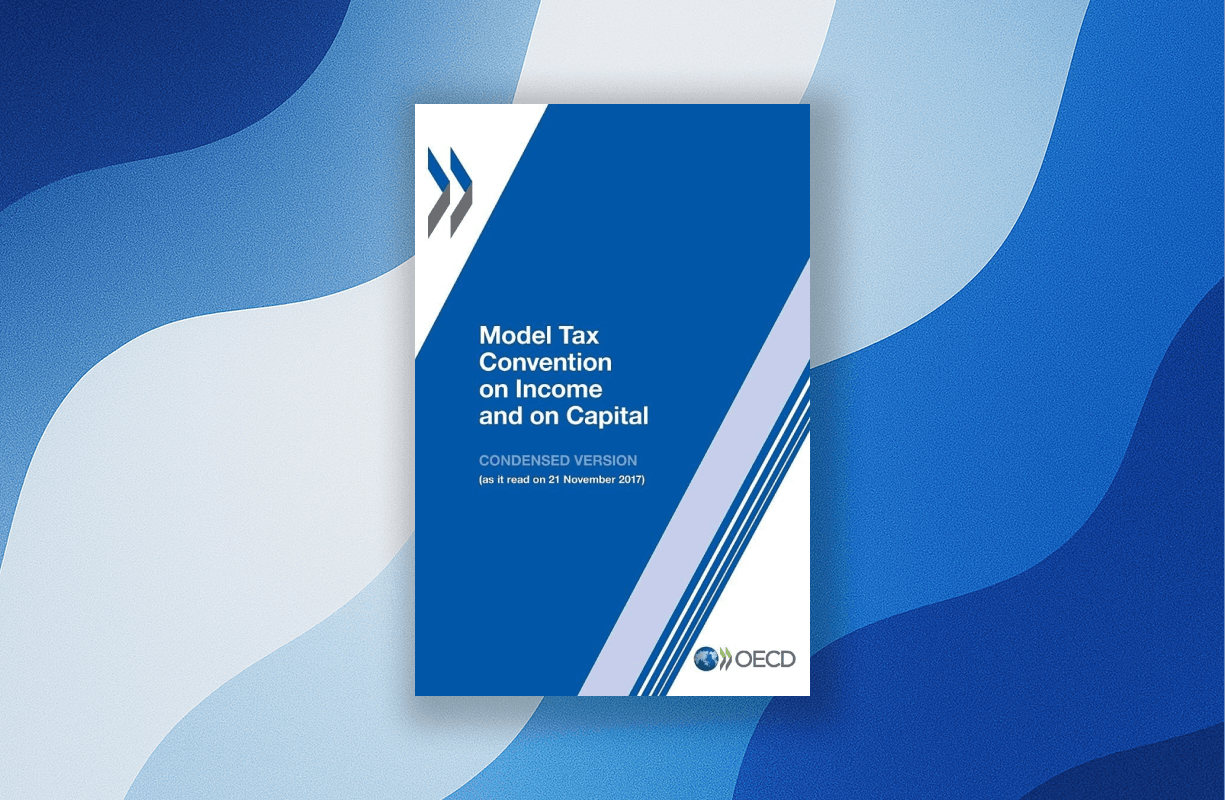
OECD Model Tax Convention
Tax treaties are negotiated instruments, but model conventions give governments a common starting structure. The OECD Model Tax Convention is one influential model; the text of the actual bilateral treaty, together with domestic law, determines the legal position for a particular case.
The OECD is an intergovernmental organization with 38 member countries. Its Council approved the original Transfer Pricing Guidelines in 1995; the current consolidated edition was published in 2022.
The Model Tax Convention contains model articles and commentary that countries may use when negotiating. It is not itself a treaty between two states and does not replace the wording, reservations, positions, or protocols in an applicable bilateral instrument.
For transfer pricing purposes, the most important provisions are in Article 9, which essentially codifies the arm's length principle. It states that if a company owns/controls another company, or two companies are owned/controlled by the same persons, their commercial and financial relations should be the same as if they were independent enterprises. If conditions differ from an independent situation, tax authorities can adjust profits as if they were independent.
Other relevant provisions include Articles 11 and 12 on interest and royalties, and Article 7 on business profits, which deals with attributing profits to permanent establishments.
4. OECD Transfer Pricing Guidelines
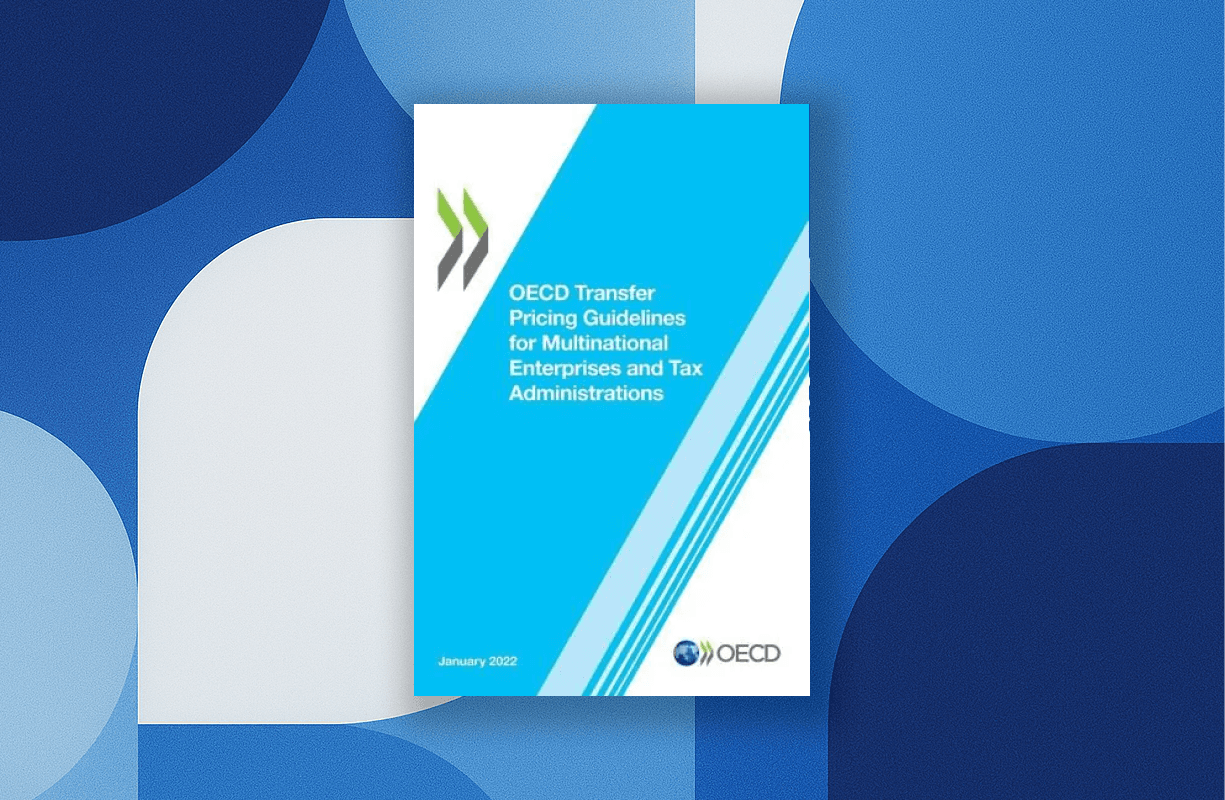
OECD Transfer Pricing Guidelines
Article 9 itself doesn't provide much detail beyond stating that tax authorities can adjust taxable profits if they don't follow the arm's length principle. Due to the complexity of applying this principle in practice, the OECD developed a separate document: "Transfer Pricing Guidelines for Multinational Enterprises and Tax Administrations" (the OECD Guidelines).
The current 2022 edition is a 659-page consolidated publication covering the arm's length principle, methods, comparability, administration, documentation, intangibles, services, cost contribution arrangements, restructurings, and financial transactions.
Key point
The OECD Guidelines serve as the international standard for transfer pricing, providing detailed guidance on how to apply the arm's length principle in various scenarios.
The Guidelines cover general principles and specified applications, organized as follows:
The OECD Guidelines are guidance rather than a substitute for domestic law or a treaty. Their legal relevance therefore depends on the rules, treaty position and administrative practice of each jurisdiction.
5. UN Transfer Pricing Manual
UN Transfer Pricing Manual
The OECD Guidelines focus on principles and rules, but some (especially developing countries) feel they're too theoretical without enough practical guidance. Some tax administrations believe the Guidelines don't cover aspects relevant to developing countries.
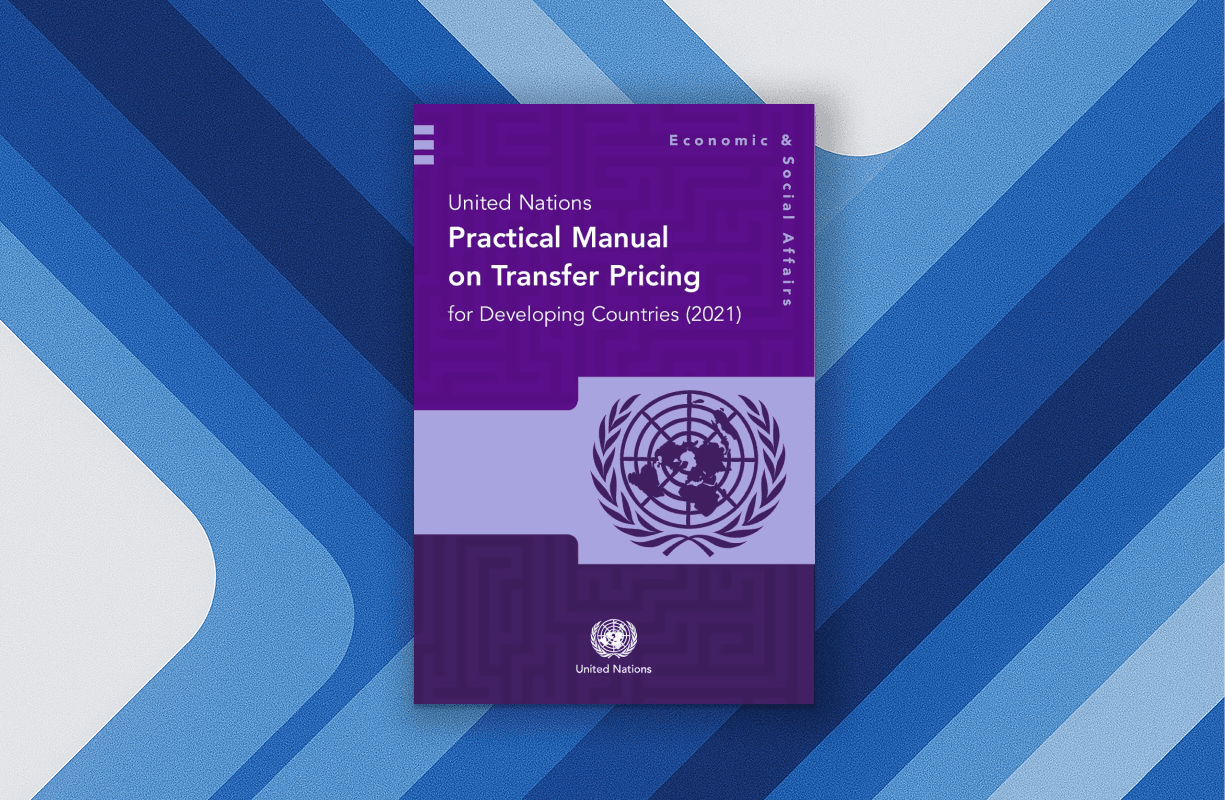
Recognizing this, the UN Committee of Experts on International Cooperation in Tax Matters developed the "United Nations Practical Manual on Transfer Pricing for Developing Countries" (the UN Manual), published in 2013 and updated in 2017 and 2021.
The UN Manual provides practical transfer-pricing guidance with particular attention to the experience and administrative capacity of developing countries. Its 2021 edition includes general methodology as well as country-practice chapters.
Tip
The UN Manual is particularly useful for tax administrations and taxpayers in developing countries who may not have the resources to fully implement the complex OECD Guidelines.
Use the Manual as a complementary source, then verify the governing domestic rules and treaty for the transaction under review.
6. OECD BEPS Project
Base Erosion and Profit Shifting (BEPS) refers to tax planning strategies used by MNEs that exploit gaps in tax laws to avoid paying tax. Following the 2008 financial crisis and revelations about aggressive tax planning, the G20 Leaders endorsed an ambitious BEPS Action Plan.
Warning
The BEPS Project fundamentally changed international tax rules with a comprehensive approach to combating tax avoidance strategies.
In 2015, the OECD and G20 countries developed a comprehensive package of 15 action reports, including new minimum standards, revised existing standards, and common approaches to facilitate convergence of national practices.
For transfer pricing, Actions 8-10 (ensuring transfer pricing outcomes align with value creation) substantially modified the OECD Guidelines regarding intangibles, risks and capital, and other high-risk transactions. Action 13 set a new documentation standard with local file, master file, and Country-By-Country Reporting.
The BEPS Project fundamentally impacted the international tax system and significantly modified existing rules and mechanisms.
7. Country-specific regulations
Many jurisdictions have transfer-pricing legislation, documentation rules or administrative guidance. For example, the United States applies section 482 of the Internal Revenue Code and its regulations.
Domestic rules determine which parties and transactions are controlled, which methods are permitted, what documentation is required, and when adjustments or penalties can arise. A treaty based on Article 9 does not make every administrative detail uniform. Practical work must therefore begin with the applicable local law and treaty, using OECD or UN guidance to the extent relevant in that jurisdiction.
What is the arm's length principle in simple terms?
The arm's length principle means that the conditions of a transaction between associated enterprises are tested against comparable dealings between independent enterprises. If Company A sells products to subsidiary Company B, an internal sale to a genuinely comparable independent customer may be strong evidence—but differences in product, volume, market, timing, terms and functions still have to be considered. See OECD Guidelines Chapter I.
What is an example of arm's length pricing?
A parent company licenses a trademark to a subsidiary. The analysis considers the rights granted, geographic scope, exclusivity, duration, market, expected benefits and the parties' contributions. A reliable uncontrolled licence may provide evidence after material differences are addressed; a generic royalty-rate range is not a substitute for that analysis. For more examples, see our benchmarking study guide.
Is the arm's length principle the same worldwide?
The core comparison with independent dealings is widely used, but its legal scope and administration vary. Domestic law controls matters such as thresholds, method rules, documentation, filing, penalties and dispute procedures. Always check the jurisdictions involved rather than treating the OECD Guidelines as self-executing law.
What happens if my company doesn't follow the arm's length principle?
If a tax authority adjusts the profits associated with a controlled transaction, the same profit can be taxed in two jurisdictions unless corresponding relief is obtained. Interest, penalties and documentation consequences depend on local law. Treaty mechanisms such as the mutual agreement procedure may be available, but their scope depends on the applicable treaty and facts.
Do I need to apply the arm's length principle to all intra-group transactions?
The answer comes from domestic law. A regime may have materiality thresholds, exemptions or simplified approaches, but those rules differ by jurisdiction and transaction. Apply the local controlled-transaction definition before deciding what must be priced or documented.
How do I find comparable transactions for unique items or services?
Start by accurately delineating the transaction and assessing which evidence can be used reliably. Depending on the facts, the analysis may consider:
less direct comparables with reliable adjustments;
a profit split where its selection factors are met;
internal comparable transactions with third parties; or
valuation techniques or another method where the recognized methods cannot be applied reliably and the result remains consistent with the arm's length principle.
Tip
For a unique transaction, document what evidence is available, why the selected method is more reliable than the alternatives, and how uncertainty is reflected in the analysis.
Is the arm's length principle effective for digital business models?
Digitalized business models can make it harder to identify relevant intangibles, contributions, markets, and reliable comparable evidence. The arm's length analysis still begins with the accurately delineated transaction and the applicable law. The OECD/G20 Two-Pillar work addresses separate international-tax questions and should not be treated as a replacement for transaction-level transfer pricing analysis.
How does the arm's length principle apply to intangibles?
For intangibles, Chapter VI examines the parties performing development, enhancement, maintenance, protection and exploitation functions, together with the assets used and risks assumed. Legal ownership alone does not determine entitlement to all returns; the controlled transaction must be accurately delineated and priced from the parties' actual contributions.
Put the principle into a reviewable workflow
The practical output is a connected evidence chain: approved facts, a delineated transaction, method selection, calculations, agreements and documentation that tell the same story. See the intercompany agreements guide for the contract-to-conduct check, the documentation guide for the master/local-file evidence chain, and AI in transfer pricing for a controlled human-review workflow.
 Borys UlanenkoCEO of ArmsLength AI